Walk into a busy bar on a Friday night and you’ll notice something almost immediately: people want a reason to stand up. They want to gather around something. They want to compete a little, laugh a little louder, and stay a little longer than they planned. That shift toward interactive, social entertainment is exactly why the bowling arcade machine has become a staple in bars, breweries, hotel lounges, and entertainment venues across the country.
For decades, pool tables and dart boards carried the weight of bar entertainment. They still do. But a bar bowling game offers something different. It’s compact. It’s approachable. It doesn’t intimidate beginners. And it blends nostalgia with modern design in a way that feels effortless. For venue owners, it’s not just about fun — it’s about revenue per square foot, customer dwell time, and creating a space people talk about after they leave.
What a Bowling Arcade Machine Actually Is
The Concept Behind the Game
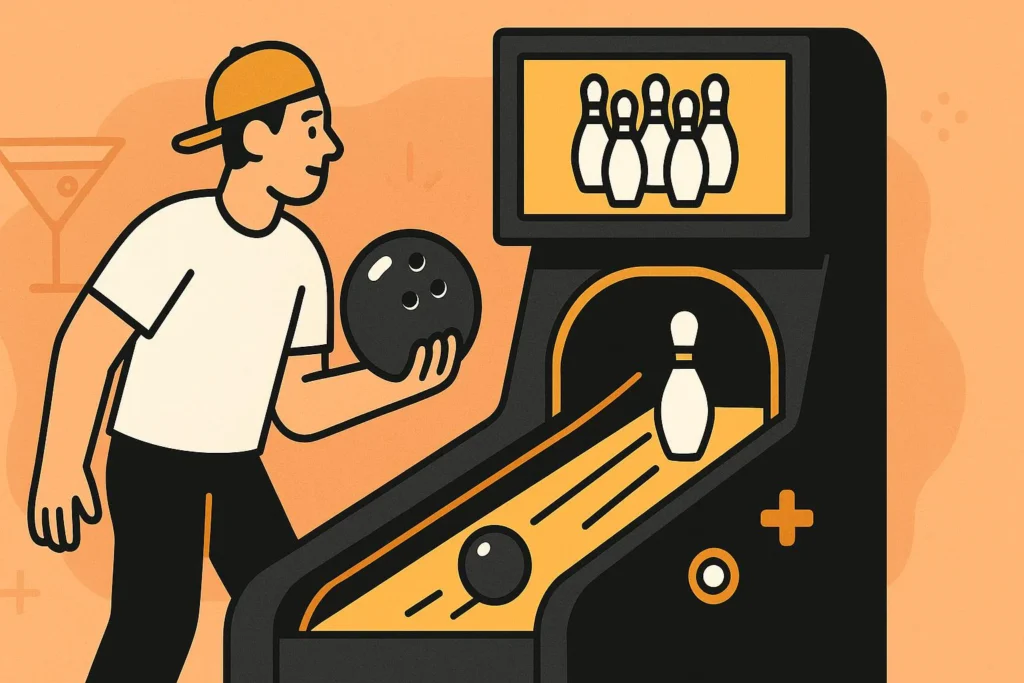
A bowling arcade machine condenses the traditional bowling experience into a commercial-grade unit designed for smaller spaces. Instead of a 60-foot lane, you’re typically working with 8 to 16 feet. Instead of 16-pound balls, scaled-down versions that are easier to roll. The mechanics are streamlined, but the competitive spirit remains intact.
Some machines resemble miniature bowling alleys with real pins and automatic resets. Others lean closer to skee-ball style ramps, a format with its own rich history. Both styles serve the same purpose: fast, repeatable gameplay that encourages groups to rotate in and out.
How a Bar Bowling Machine Works
Most modern machines operate with three core systems:
- Ball return: Gravity-fed or motorized systems that cycle the ball back to the player.
- Pin reset or scoring mechanism: Automated sweep arms or internal resetting hardware.
- Digital scoring: LED or LCD displays that calculate frames automatically.
Commercial units are built with reinforced lanes, industrial-grade motors, and impact-resistant rails. They’re designed for high-traffic environments, not occasional basement use. And yes, they typically plug into a standard outlet — though checking amperage requirements before installation is always wise.
Why Bars and Breweries Are Investing in Bar Bowling Games
They Increase Dwell Time
The longer guests stay, the more they spend. It’s a simple hospitality truth supported by industry research from organizations like the National Restaurant Association. A bowling arcade game gives customers a reason to extend their visit. One round turns into three. A casual challenge becomes a rematch.
And unlike pool, which often involves just two players, bowling cycles people through quickly. Groups gather. Spectators cheer. Even people who don’t normally consider themselves “gamers” join in.
They’re Beginner-Friendly
Bowling has universal recognition. Most guests understand the objective within seconds. There’s no complicated rulebook to explain. That accessibility matters in environments where patrons may be socializing, not studying instructions.
They Generate Predictable Revenue
Most bar bowling machines operate on:
- Coin or token mechanisms
- Card-based arcade systems
- Integrated POS credits
Modern point-of-sale systems make it easier than ever to track play data, peak usage times, and per-hour earnings. When placed strategically, a bowling arcade machine can become one of the most consistent revenue producers on the floor.
Types of Bowling Arcade Machines
Mini-Lane Pin Bowling
This is the closest experience to traditional bowling. Real pins, automatic reset systems, frame-by-frame scoring. These machines tend to command a higher upfront investment but offer stronger visual impact.
Skee-Ball Style Bowling
Instead of pins, players aim for scoring rings or targets. These units are often slightly shorter and mechanically simpler, which can mean lower maintenance costs.
Hybrid and Digital-Enhanced Models
Some newer machines incorporate LED lighting packages, animated scoring displays, and even app-connected leaderboards. In sports bars or high-energy venues, those digital enhancements can increase visibility and engagement.
Space Planning and Layout Considerations
Space efficiency is one of the biggest advantages of a bar bowling machine. But placement matters more than most operators expect.
Consider:
- Total lane length plus at least 4–6 feet of player clearance
- Ceiling height for comfortable throwing motion
- Foot traffic patterns during peak hours
- Noise proximity to dining areas
Machines placed near high-visibility areas — but not blocking service routes — typically see the highest usage. And lighting matters. Subtle accent lighting around the unit can increase participation without overwhelming the space.
Build Quality and What Separates Commercial Units From Home Models
It’s tempting to compare prices online and assume all bowling arcade games are similar. They’re not. Commercial-grade machines differ in several critical ways:
- Steel-reinforced frames rather than lightweight composite
- Durable lane coatings built for thousands of rolls per week
- Heavy-duty motors rated for continuous operation
- Manufacturer-backed warranties and service networks
And warranties matter. A longer warranty often signals confidence in mechanical longevity. Ask about parts availability and average repair turnaround times before purchasing.
Cost Breakdown and Realistic ROI Expectations
Purchase Price
New commercial bowling arcade machines generally range from $4,000 to $12,000 depending on size, brand, and digital features. Refurbished units may reduce upfront costs but can introduce higher maintenance variability.
Installation and Setup
Delivery, positioning, leveling, and minor electrical work may add to total investment. Some suppliers bundle installation; others price it separately.
Operating Costs
Electricity usage is modest. Ongoing costs typically include replacement balls, pins, occasional motor servicing, and routine cleaning supplies.
Revenue Potential
Pricing models vary by market, but many venues charge per frame or per game. With steady foot traffic, operators often report break-even timelines between 12 and 24 months. Actual ROI depends on placement, pricing, and promotional support.
Maintenance: What Owners Often Overlook
Daily cleaning of the lane surface prevents debris buildup. Weekly inspections of balls and pins reduce stress on internal components. And monthly checks of mechanical systems can catch small issues before they become expensive repairs.
Access panels should be easy to open. If they’re not, routine maintenance becomes inconvenient — and neglected equipment rarely performs well long-term.
Bowling Arcade Machines vs. Other Bar Games
Compared to Pool Tables
Pool tables require significant clearance and periodic re-felting. Gameplay is slower and often limited to two participants. A bowling arcade game typically cycles more players per hour.
Compared to Darts
Darts are inexpensive but carry safety considerations and limited spectator appeal. Bowling machines offer safer group participation with fewer liability concerns.
Compared to Shuffleboard
Shuffleboard appeals to a niche demographic and often requires long lanes. Bowling’s universal familiarity gives it broader age-group reach.
Marketing Your Bar Bowling Game Effectively
Simply installing the machine isn’t enough. Promotion matters.
Launch with a high-score contest. Offer small incentives — drink specials, branded merchandise, or event tickets. Create a visible leaderboard. Encourage guests to post scores on social media. And if your venue already hosts trivia or karaoke nights, consider weaving bowling into those events.
Some operators even create seasonal mini-leagues. It doesn’t need to be formal. A chalkboard and a little friendly rivalry go a long way.
Customization and Branding Opportunities
Many manufacturers offer custom wraps, LED lighting packages, and branded backboards. A bar bowling machine can be styled to match industrial décor, retro aesthetics, or modern minimalist interiors.
And branding isn’t just visual. Consider naming the lane. It sounds small, but giving the machine personality makes it part of the venue’s identity.
Common Buying Mistakes
Choosing the cheapest model without considering durability. Underestimating space requirements. Ignoring service network availability. Or assuming any game will fit any demographic.
A high-energy sports bar may thrive with flashing LED displays and fast gameplay. A quiet craft cocktail lounge may benefit from a more understated, wood-finished mini-lane.
Frequently Asked Questions
How much space is required?
Most machines require between 10 and 16 feet of length plus player clearance. Always confirm exact specifications with the manufacturer.
Are bowling arcade machines profitable for small venues?
Yes — particularly when space is limited and customer turnover is steady. Revenue per square foot often compares favorably to larger entertainment options.
How long do they last?
With proper maintenance, commercial units can operate reliably for many years.
Is financing available?
Many commercial amusement suppliers offer leasing or financing plans, particularly for established venues.
Turning Entertainment Into Long-Term Value
A bowling arcade machine isn’t just another fixture on the floor. It changes how people move through your space. It creates a focal point. It encourages strangers to talk to each other. And in an industry where experience increasingly defines loyalty, that matters.
The right bar bowling game fits your layout, matches your demographic, and pays for itself steadily rather than dramatically. It doesn’t need to be flashy to work. It needs to be durable, visible, and easy to use.
When chosen carefully and supported with thoughtful placement and promotion, a bowling arcade machine becomes more than equipment. It becomes part of the rhythm of the room — the sound of pins falling, a quick cheer, another round ordered at the bar. And that rhythm, over time, is what keeps people coming back.