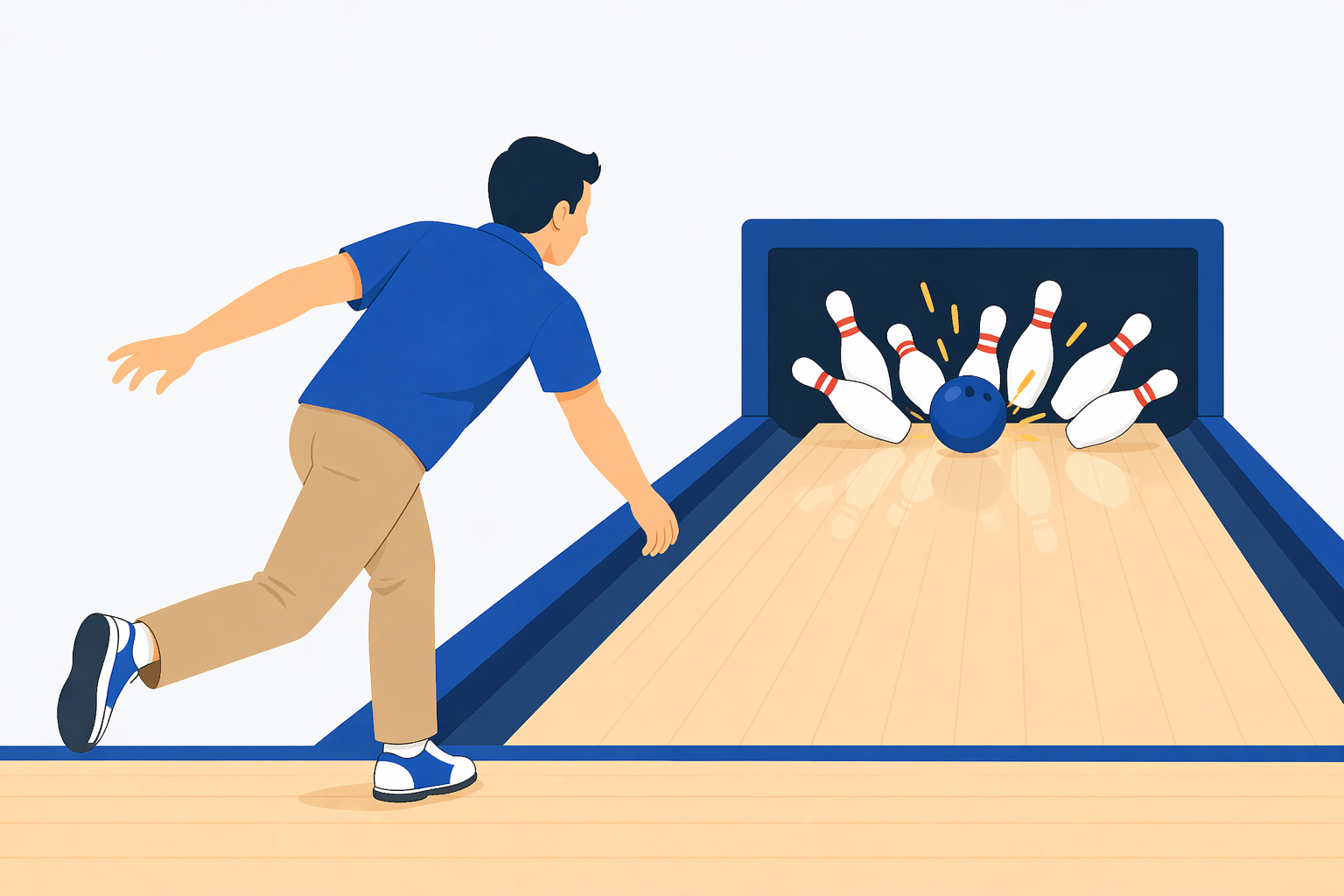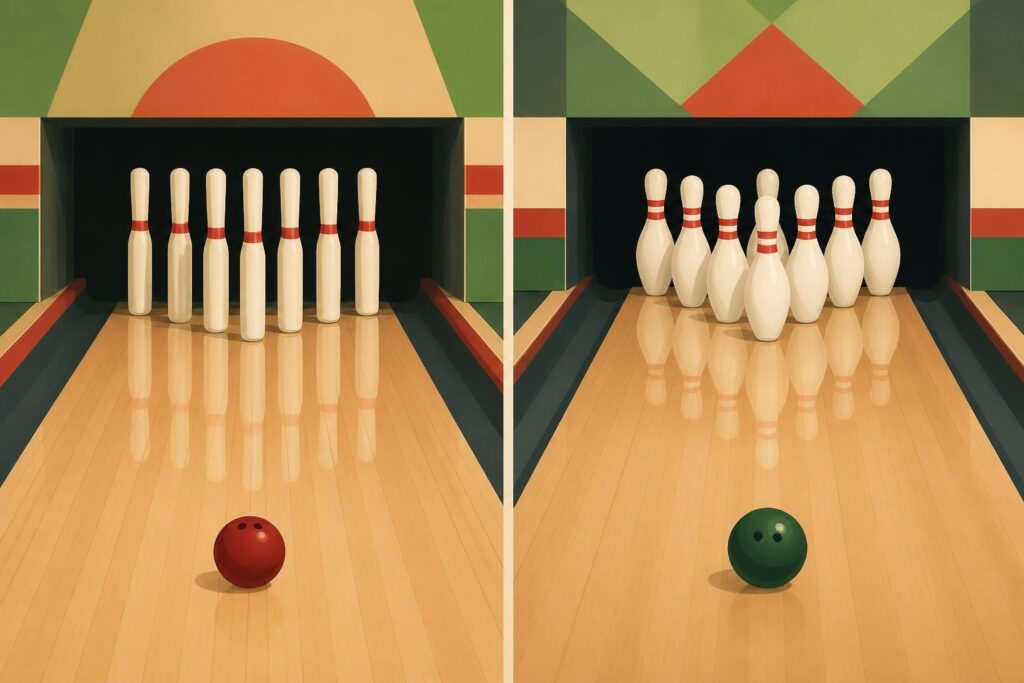
You can usually tell the moment someone walks into a small-ball bowling center for the first time. They look at the ball return, pick up one of the tiny balls, and do that quick double take that says, “That is supposed to knock down all the pins?” That reaction is why people ask what is bowling with a small ball called, and the answer is usually candlepin bowling or duckpin bowling.
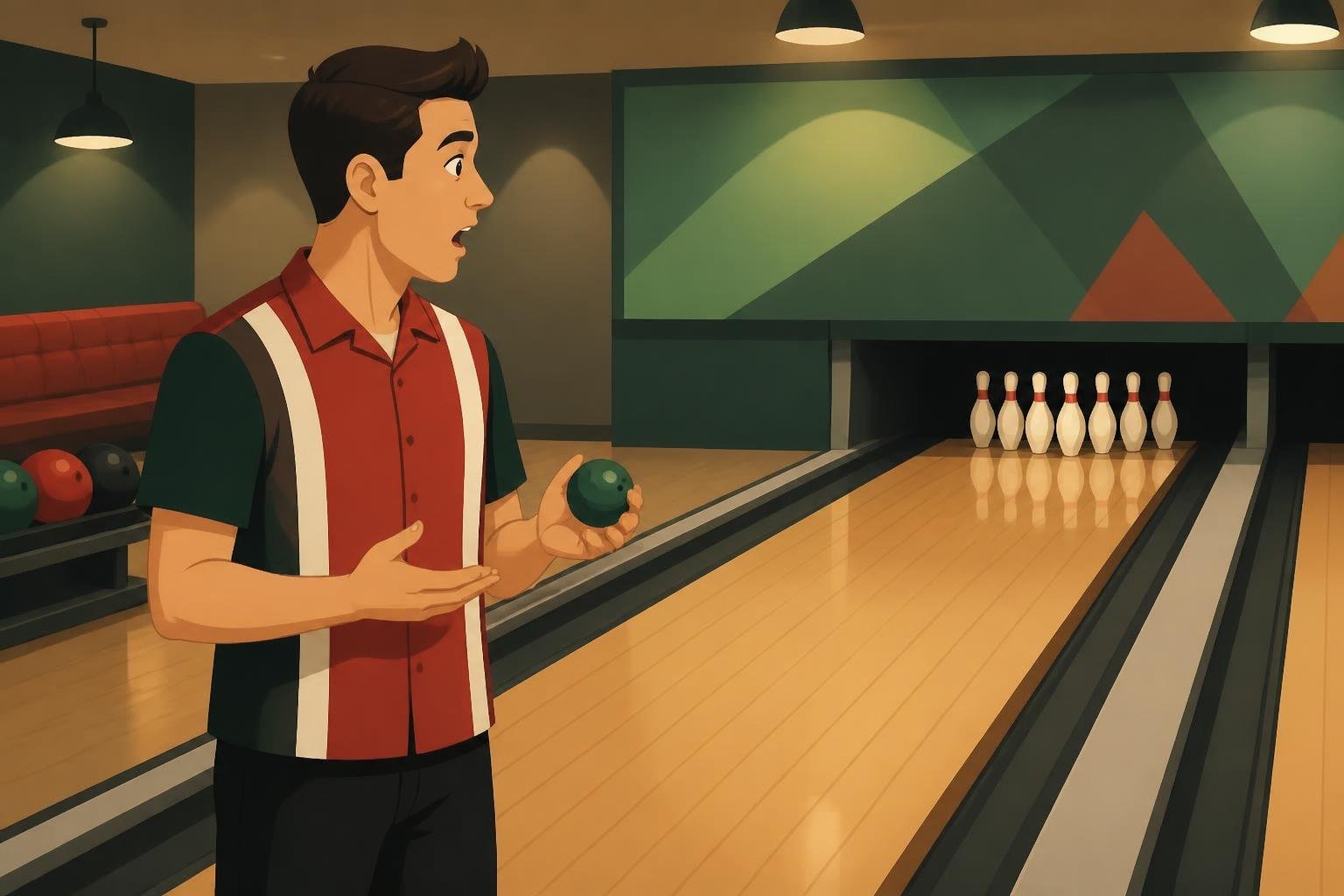
Those are the two names you are most likely after, but they are not interchangeable. Candlepin and duckpin are related, and they share a few family traits, but they play differently once the ball leaves your hand. The pins are shaped differently, the frame rhythm is different, and in candlepin, even the fallen pins can keep affecting the shot. If you are a casual bowler, those differences are the part that matters. They tell you what the game will feel like before you ever step onto the approach.
If you already know ten-pin bowling, think of this article as the practical version of, “What changes when the ball gets smaller?” You do not need a pile of bowling jargon to follow along. You just need a clear picture of what is in your hand, what is standing at the other end, and what happens after the first ball hits the rack.
What people usually mean by bowling with a small ball
When someone says “bowling with a small ball,” they are usually talking about one of two sports: candlepin or duckpin. They are both small-ball bowling games, but they are not the same game with different nicknames. The pins are different, the scoring rhythm is different, and the way you manage a frame is different.
That distinction matters because the word “small” can hide a lot. The ball is not the only thing scaled down. The pins are smaller too, and the lane action changes with them. A small ball hitting a small pin deck does not behave the same way a standard house ball does on a ten-pin lane. Once you know that, the game starts making sense quickly.
For the standard game most bowlers know, the governing body in the United States is the United States Bowling Congress, or USBC. Candlepin and duckpin have their own rule structures and organizations, which is one reason they are treated as separate sports rather than variations of the same thing. The USBC’s basic rules page is a good reference point if you want standard ten-pin context beside the small-ball comparison.
The simplest short answer, then, is this: if you are asking what bowling with a small ball is called, the answer is usually candlepin or duckpin. If you are asking what makes them different, the answer is in the pins, the frame, and the way each game asks you to solve the lane.
Candlepin vs. duckpin, the quick way to tell them apart
Here is the easiest way to separate the two before the details start blurring together: candlepin uses tall, thin pins and a very small ball, while duckpin uses shorter, wider pins and a small ball. That one visual difference changes the whole feel of the game. Candlepins look upright and narrow, almost like they were stacked with a little extra care. Duckpins look lower and sturdier, more compact on the deck.
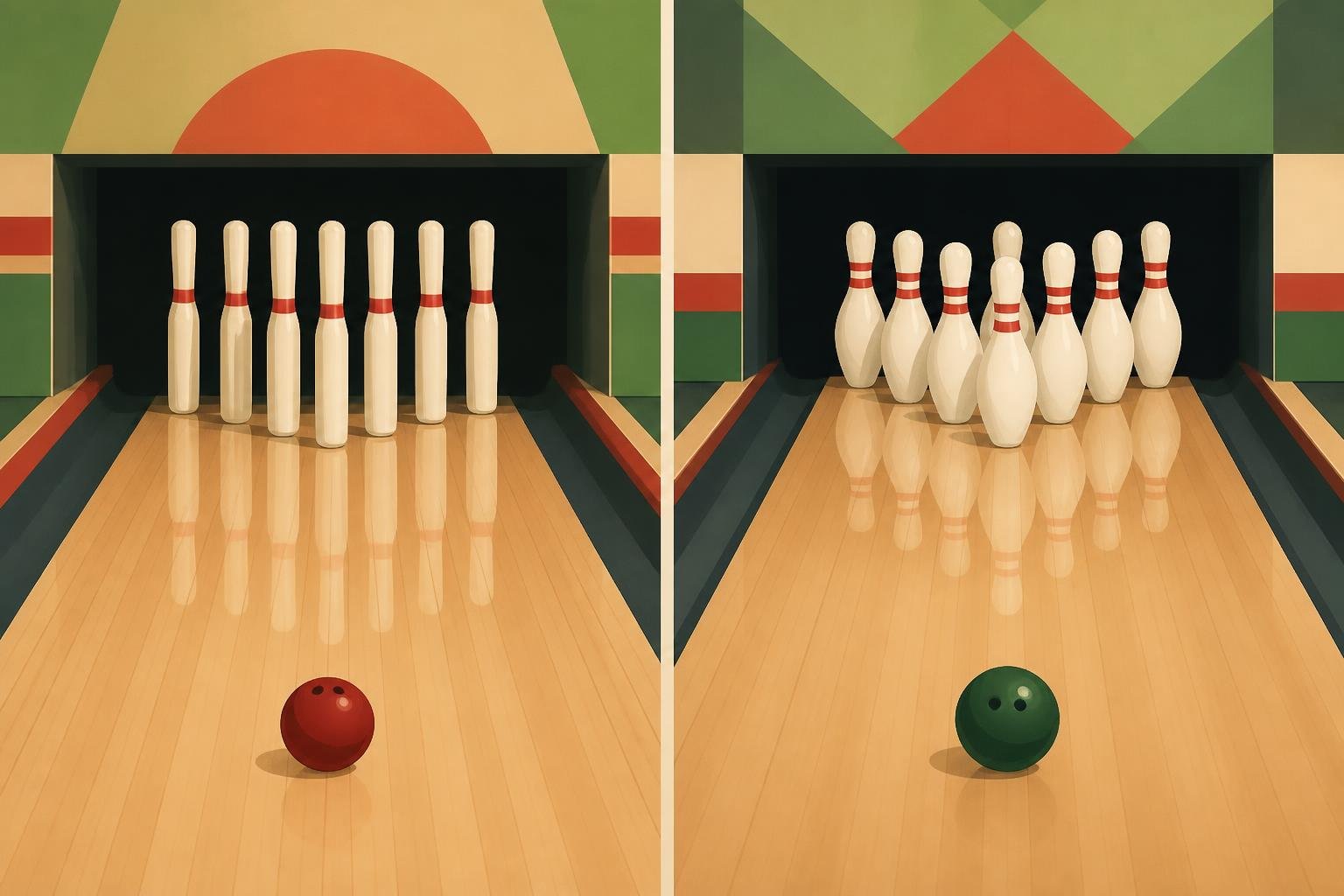
The second difference is what happens after the first shot. Candlepin keeps fallen pins in play as deadwood, which means the frame often turns into a live cleanup puzzle. Duckpin does not use deadwood the same way, so the frame feels more contained. The ball still matters, the pin action still matters, but the lane does not keep as much leftover debris in the way of your next shot.
The third difference is the rhythm of the frame. Duckpin uses a three-ball frame structure, which gives the game a different decision pattern from both ten-pin and candlepin. Candlepin bowlers are often dealing with a more reactive, more cluttered lane after the first ball. Duckpin bowlers are dealing with a compact rack and a slightly more familiar frame flow, even though it is still its own sport.
If you remember those three things, you will already be ahead of most casual observers: pin shape, deadwood, and frame rhythm. Everything else is detail, and the detail matters because that is what you feel when you actually bowl.
How candlepin bowling works
Candlepin is the small-ball game that tends to surprise people most. At a glance, it can look almost gentle, because the ball is small enough to hold in one hand and the pins are slim rather than bulky. But the moment the first shot leaves the hand, you realize the game is asking for something very specific: control. Not just of speed, but of where the ball starts, how cleanly it rolls, and what kind of pin mess you leave behind.
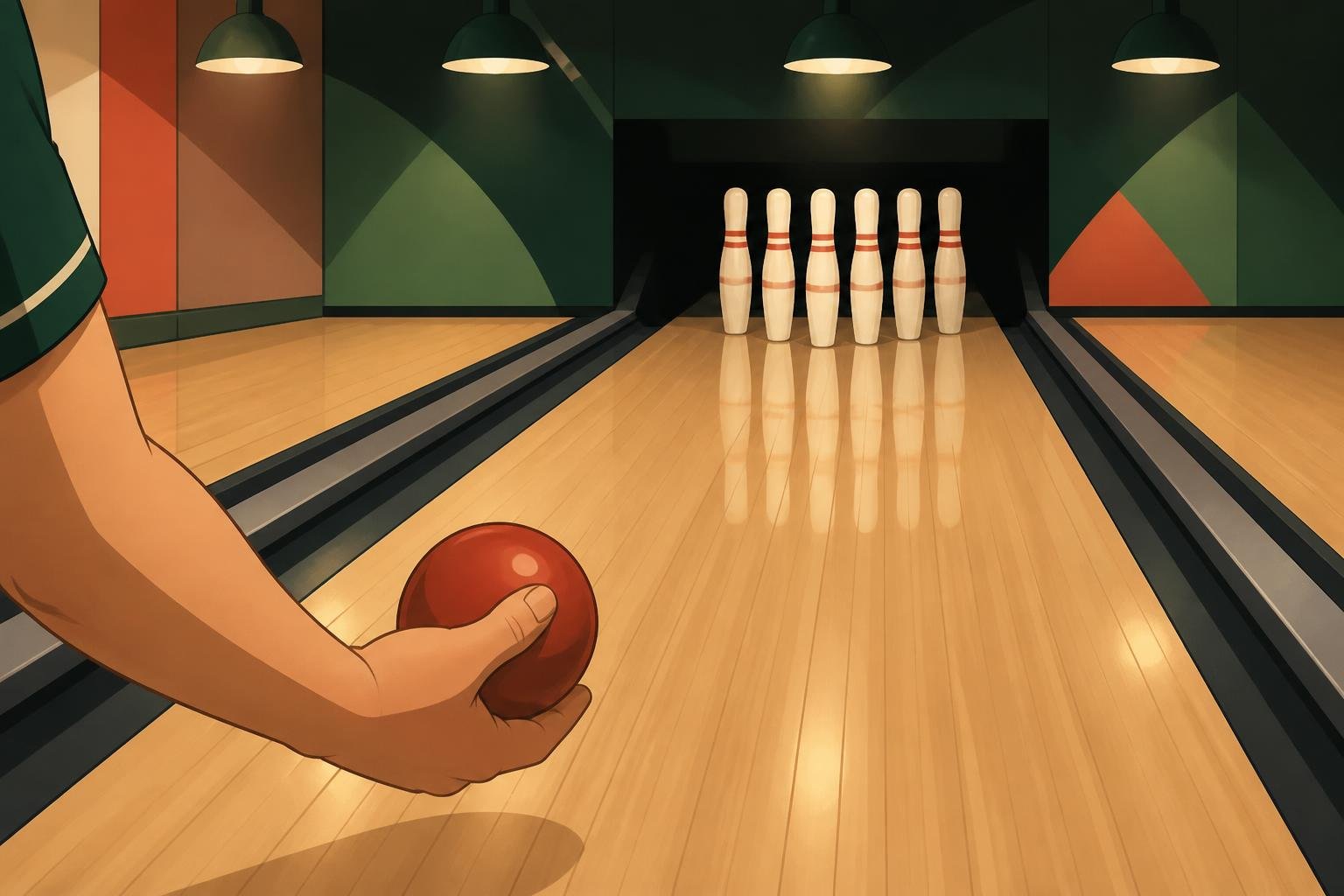
The ball has no finger holes, which changes your grip immediately. You are not fitting your fingers into drilled holes and managing a house ball the way you might in ten-pin. You are holding a smooth, smaller ball and releasing it with a motion that usually feels more direct and less rotational. That does not make the game easy. It makes the release different. If you try to force a ten-pin style hook into candlepin, the game usually makes that decision for you in the form of an awkward leave.
The pins are tall and narrow, which is why the game looks so unusual if you are seeing it for the first time. Their shape creates weird, interesting pin action. A pin that appears to be safely leaning can stay alive longer than you expect. Another pin can tip late and take out something you thought was protected. Candlepin has a way of making you watch the lane instead of just the rack.
What candlepin feels like from the approach
If you are used to ten-pin, the first thing candlepin changes is your sense of effort. The ball feels light in the hand, but that can be misleading. Because the ball is small and the pins are thin, a cleaner release often matters more than a harder throw. You will usually see better results when you stay balanced and send the ball straight at your target instead of trying to overpower the rack.
That straight-line feel is one of the most noticeable differences for a first-timer. In ten-pin, many bowlers think in terms of shape, angle, and hook. In candlepin, you are often thinking in terms of line and contact. Where do you want the ball to pass through the front of the rack? How much room is there around the deadwood? What pin do you want to leave if you do not strike? Those are the questions that start taking over.
The other thing you notice quickly is how visible the aftermath is. Because the pins are narrow and the deadwood stays on the lane, the frame does not reset in your head after every shot. You are reading the leftover pins, the gaps between them, and the awkward little blockers that can turn a makeable spare into a tricky one. That is a large part of candlepin’s character. The frame is still open while you are still in it.
Why deadwood changes the game
Deadwood is one of the most important candlepin terms to understand. It means fallen pins that remain on the lane between balls in the same frame. In candlepin, those pins do not disappear just because they are no longer standing. They stay where they fell, and the exact spot they land can affect your next shot in a very real way.
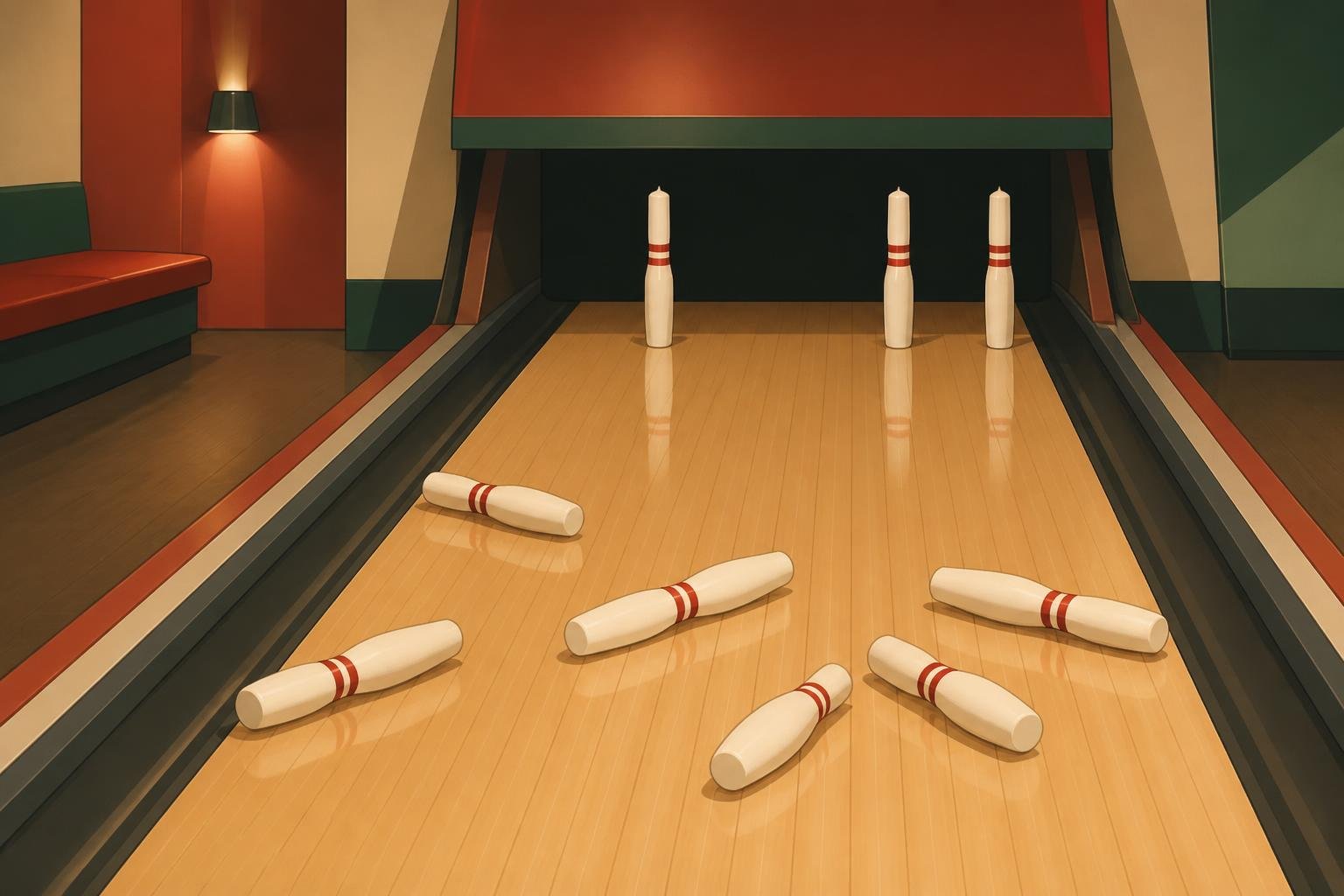
That means every ball after the first one has to be thrown with the lane condition in mind. A fallen pin might sit in the center of the lane and create a direct obstacle. It might lie sideways and act like a blocker. It might be angled in a way that helps guide the ball or redirect a standing pin. Once you see deadwood in action, you understand why candlepin bowlers spend so much time reading the lane rather than just staring at the remaining standing pins.
A simple example helps. Suppose your first shot leaves a pin lying on its side near the headpin area. On your next ball, that deadwood might knock your shot off line, or it might help deflect another pin into a makeable spare. The exact same leave can feel friendly or annoying depending on the angle. That is candlepin in a nutshell. The lane after the first ball is still part of the puzzle, not just the background.
For the official rule context around this live-pin feature, the ICBA rules and regulations page is the best place to look. If you want the sport explained by its governing body rather than by a generic summary, that is the reference to use.
What candlepin bowlers are really trying to do
If you watch a skilled candlepin bowler, you will usually notice that the shot looks calmer than people expect. The motion is compact. The release is controlled. The ball is not being muscled down the lane. That is because candlepin is less about blasting the pins and more about putting the ball in the right place and letting the rack react naturally.
That does not mean power is useless. It just means power is not the main solution. If your line is off, more speed usually makes the miss worse. If your release is sloppy, a strong throw will not fix it. The game is asking you to be thoughtful shot by shot. You are not just trying to strike. You are trying to create a manageable leave when you do not strike, and that matters because deadwood can turn the next ball into a second problem if you are not careful.
That is why candlepin has such a strong reputation for precision. The scoring is important, but the lane reading is what separates a casual outing from a bowler who starts to feel comfortable. You do not need to play perfect to enjoy it. You do need to pay attention.
How duckpin bowling works
Duckpin is the small-ball game that often feels easier to recognize at a glance if you already know ten-pin. The lane still looks like bowling. The approach still looks like bowling. The ball is small and thrown without finger holes, but the pins are shorter and thicker than candlepins, and that gives the pin deck a denser, more compact look.
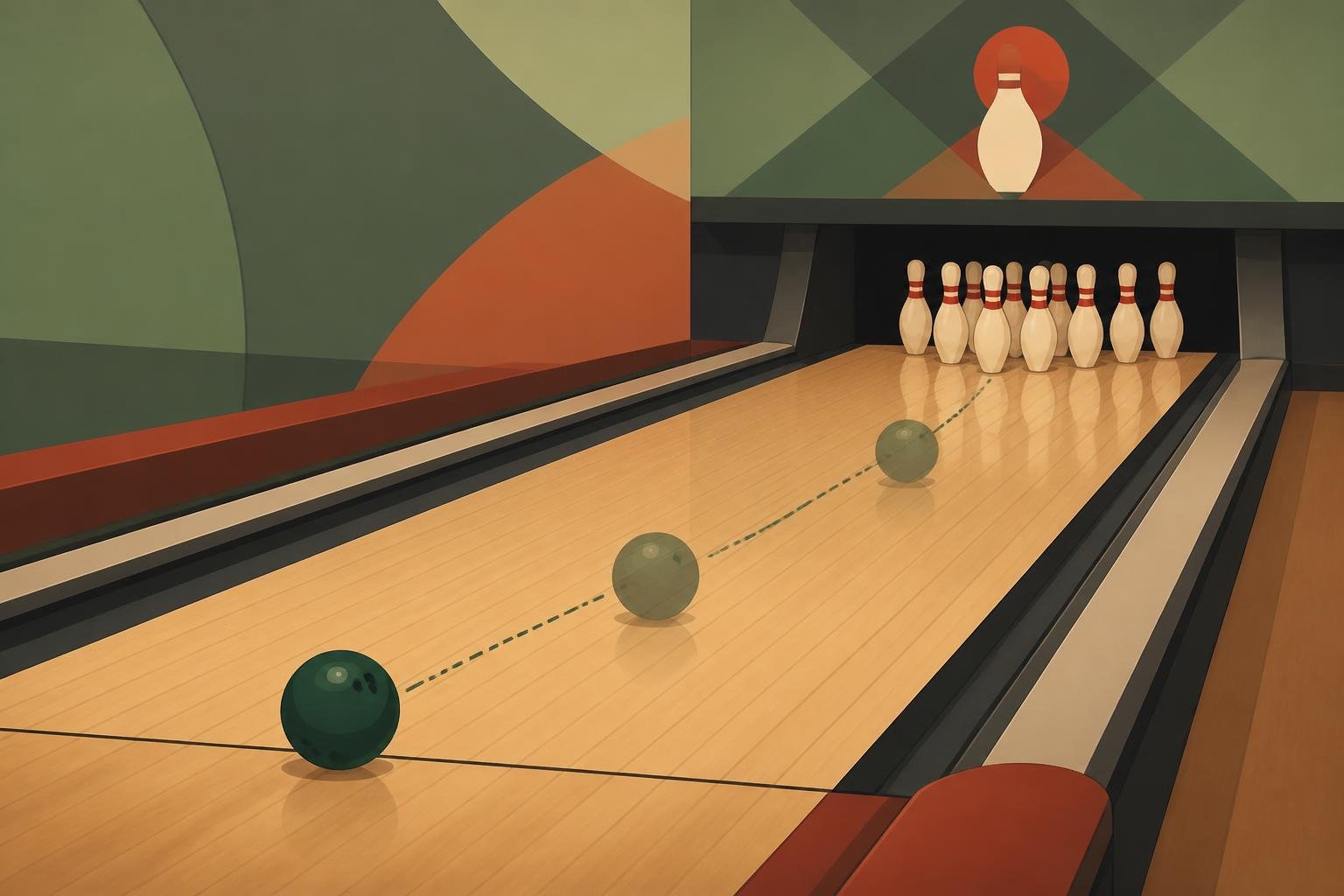
The game has its own rule set and governing structure. The National Duckpin Bowling Congress is the organization most closely associated with the sport’s oversight in the United States, and its rule book lays out how the game is played. A useful detail to remember is that duckpin uses a three-ball frame, which changes the frame strategy in a way casual bowlers notice right away.
That three-ball structure matters because it changes how you think about your first shot. In ten-pin, you are usually trying to do as much damage as possible on the first ball because you only get one more shot to finish the frame. In duckpin, you still want a strong first ball, but you also have a little more room to work with. The frame is not automatically easy, though. A poor leave can still create a tricky cleanup, and the smaller pin deck means your spare angles are tighter than they look from the seating area.
What duckpin feels like when you first try it
Duckpin is often the small-ball game that ten-pin bowlers understand fastest, at least visually. The overall rhythm still feels like bowling in the ordinary sense. You line up. You throw. You see what is left. You make the next decision. But because the ball is smaller and the pins are compact, the margin for sloppy targeting is not generous.
The pins themselves are a big part of that feel. Duckpins are shorter and broader than candlepins, so the deck looks tighter and lower. A lane full of duckpins does not give you the same tall, delicate silhouette you see in candlepin. Instead, it looks like a compressed rack that still has plenty of room to punish a miss. That visual difference is not just cosmetic. It changes how your brain reads the target.
On the approach, duckpin tends to reward a steady, repeatable delivery. The ball is small enough to carry comfortably, but the release still has to be clean. If you throw too hard, the ball can blow past the line you wanted. If you get too tentative, you may not get the pin action you need. The game asks for balance, not force, and it shows you quickly when you are off.
Why the three-ball frame changes your decisions
The three-ball frame is one of the clearest reasons duckpin feels different from what most bowlers know. You are not just thinking, “Can I strike, or can I spare?” You are thinking through a short sequence. If the first ball leaves a spread, how much can you clean up with the second ball? If the second ball still leaves work to do, what is the smartest third shot? That gives the frame a slightly different rhythm and a little more tactical breathing room.
For a casual bowler, this means duckpin often feels more forgiving in one sense and more precise in another. You have one extra ball to solve the frame, which helps. But the smaller equipment and tighter pin geometry make the actual spare work more exacting than you might expect. A leave that looks harmless from the bench can feel much less harmless once you are standing on the approach and trying to pick off a stubborn pin.
That combination is what makes duckpin interesting. It is familiar enough to be understandable, but different enough to keep you honest.
The differences you will actually notice on the lane
When bowlers compare candlepin vs. duckpin, the conversation can get technical fast. If you are just trying to understand the sport, keep it practical. The differences you will notice first are the ones you can see, feel, and react to in the moment.
First, the ball feels different. In both games, you are holding a smaller ball without finger holes. Candlepin usually feels smaller and lighter than duckpin, and that changes the sense of touch in your hand. Duckpin still feels small compared with ten-pin, but it has a little more physical presence.
Second, the pins behave differently. Candlepin’s tall, slim pins can wobble, fall late, and create odd deflections. Duckpin’s shorter pins create a denser-looking rack and a different kind of scatter. If you are trying to predict pin carry, that shape difference matters a lot more than the name suggests.
Third, the frame management is different. Candlepin’s deadwood means the lane can become messy in a hurry. Duckpin’s three-ball frame means your cleanup strategy follows a different rhythm. You are not managing the same kind of problem from one game to the other.
That is the part casual bowlers tend to remember after their first try. Not the labels. The feel. One game gives you a lane full of live leftovers to solve. The other gives you a compact, fast-moving frame that still demands precision. Both are smaller than ten-pin, but neither one is just a reduced-size copy of it.
If you bowl ten-pin, which one will feel stranger?
Most ten-pin bowlers find candlepin stranger at first. The deadwood changes how you think, the pins are visually unusual, and the shot often asks for a cleaner, straighter motion than a typical house-ball ten-pin game. If you are used to walking up, sending a hooked shot, and watching the pins explode, candlepin can feel like a different language.
Duckpin usually feels more familiar on the surface. The setup still looks like a bowling lane, and the frame has a cleaner rhythm that is easier to follow the first time out. That said, familiar is not the same as easy. Duckpin still punishes rushed feet, loose targeting, and a sloppy release. It just does so in a way that feels a little closer to the bowling most people already know.
If you want the plain-English version, candlepin is more likely to make you rethink the game. Duckpin is more likely to make you refine it.
What the ball and pins are teaching your eyes
One of the best ways to understand small-ball bowling is to pay attention to what your eyes are forced to read. In ten-pin, your eye often starts with a pocket target or a line down the lane. In candlepin and duckpin, you still need a target, but the pin deck itself gives you more information because the equipment is so compact.
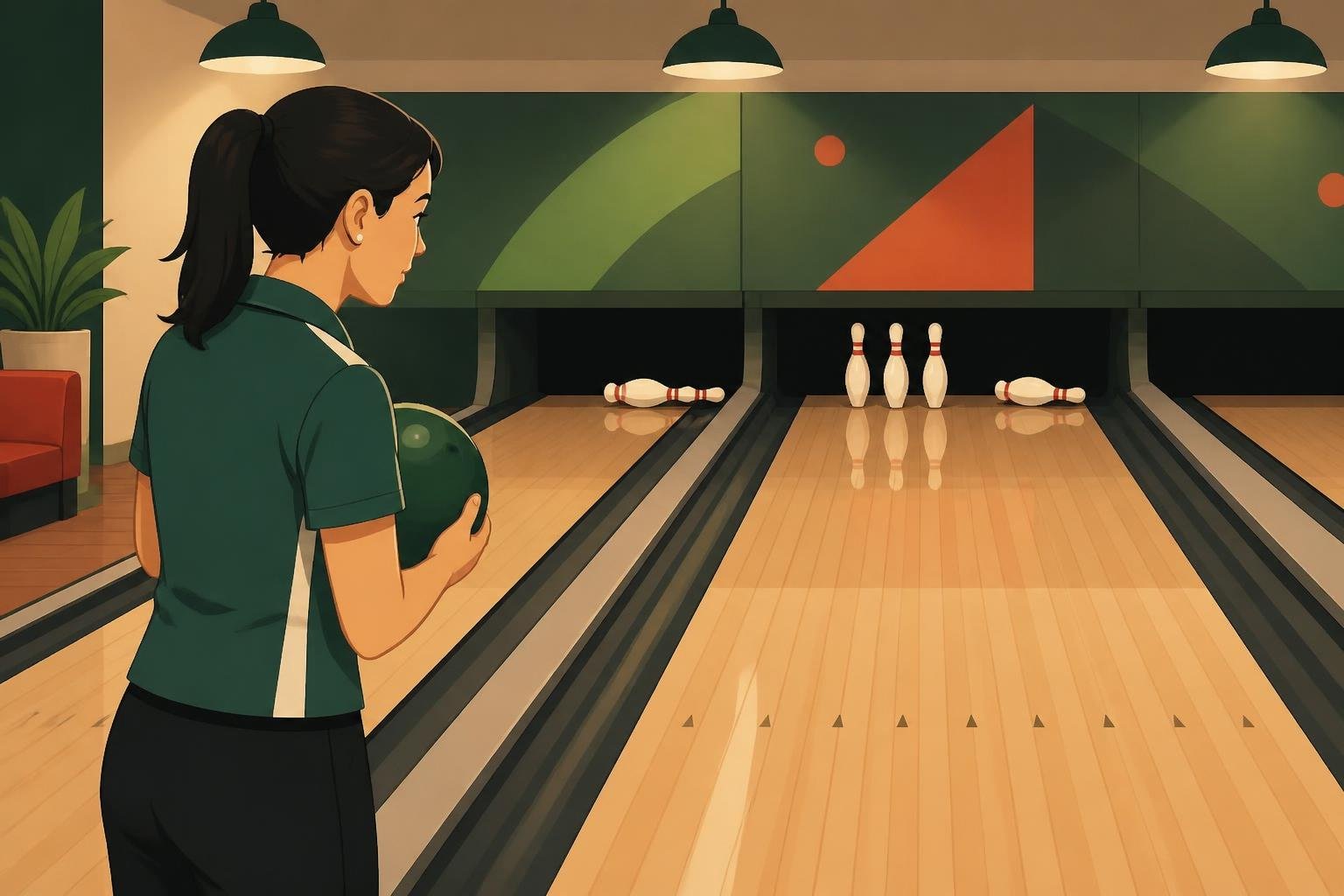
In candlepin, you are constantly asking yourself what the deadwood is doing. Is it blocking the direct path? Is it going to redirect the next ball? Is there a lane through the clutter if you stay patient? The game teaches you to look at what is lying there, not just what is standing there.
In duckpin, your eyes are reading a tighter rack and a different kind of carry. The pins are short and dense enough that the leave can look deceptively manageable. You learn quickly that “looks makeable” and “is makeable” are not always the same thing. That is part of why the three-ball frame matters. It gives you more room to think, but not so much room that you can be careless.
If you like thinking about leaves and how pins interact, GoBowling’s bowling pin formations explained guide is a useful companion. The formations are not identical in small-ball games, but the habit of reading what is left standing carries over.
Where candlepin and duckpin are played
One reason many bowlers ask about small-ball bowling is simple: they have seen it, heard about it, or maybe caught a clip online, but they have never had a chance to try it. Part of that is regional. Candlepin is strongly associated with New England and nearby areas. Duckpin has deep roots in the Mid-Atlantic, especially around Baltimore, though it shows up in other places too.
That regional pattern is not an accident. These games require specialized equipment, and specialized equipment is harder to maintain if a center does not already have a lane built for it. You need the right pins, the right ball returns, and the right setup for the game to run properly. A center can’t just treat candlepin or duckpin as a casual add-on in the way it might add another open-play lane. The format has to be supported from the start.
That is why these sports tend to build loyal communities instead of appearing everywhere. Where the lanes exist, bowlers often stick with them for years. The game has a different feel, and once people learn that feel, they usually understand why it stays popular in pockets rather than spread evenly across the country.
If you are curious about organized bowling more broadly, GoBowling’s how bowling leagues work guide is a good next read. The format is written for standard league bowling, but it helps you understand how bowling communities are built around regular play, scheduling, and lane culture.
Common mistakes you make when you try a small-ball game for the first time
The first mistake is usually the simplest one: you throw too hard. That habit shows up a lot because people assume the smaller ball needs more speed to do the job. In candlepin and duckpin, that instinct often backfires. The ball is light enough that a rushed release can get wild, and the pin action is controlled more by contact and line than by raw force.
The second mistake is expecting ten-pin hook to save you. It probably will not. Small-ball bowling often rewards a straighter delivery and a cleaner release. If you are trying to shape the ball like a league ten-pin shot, you may find yourself missing the target more than helping yourself. It is better to aim for repeatability first and worry about fancy shape later, if at all.
The third mistake is ignoring what is left on the lane. In candlepin, especially, deadwood changes the shot you should take. A pin lying on its side is not decoration. It is part of the lane now. If you step up and throw as though the lane is empty except for standing pins, you are giving away chances that a more patient bowler would notice.
The fourth mistake is overthinking the frame rhythm. Duckpin gives you three balls, which can tempt you to treat the first shot like a warm-up. Candlepin’s live deadwood can make you rush because the lane looks messy. In both games, the first shot still matters. The best approach is to settle into the frame one shot at a time and let the game tell you what to do next.
If you want to tighten up your general habits before trying a small-ball game, GoBowling’s bowling tips for beginners guide is a good place to start. The mechanics are not identical, but balance, timing, and aiming consistency help in every version of bowling.
One more useful point: the best shot in a small-ball game often looks quieter than the shot you think you should make. A smooth, direct delivery tends to hold up better than a dramatic swing at the lane. That is especially true if you are new and still getting used to how the smaller ball comes off your hand.
What to ask the center before you try it
If you are looking to try candlepin or duckpin for the first time, a few simple questions can save you a lot of confusion at the counter. Start with the basics: is the center offering candlepin or duckpin, and does it provide a quick explanation for newcomers? Some places have a regular crowd that knows exactly what to do, while others are used to first-timers who need a little guidance.
It also helps to ask whether the center has house balls that fit beginners comfortably. Since the balls are smaller and handled differently, you want one that feels easy to control, not one that makes your hand tense up before the first frame starts. A relaxed grip goes a long way in both games.
Finally, ask about open play or beginner-friendly times. If the lane is busy with league bowlers, the pace may be faster than what you want on your first try. A quieter session gives you a better chance to watch the pin action, understand the frame, and make sense of what the game is asking from you.
A simple way to explain the small-ball games to a friend
If you want the short version, you can say this: bowling with a small ball is usually called candlepin or duckpin, and the difference comes down to the pins, the frame, and how the lane behaves after the first shot.
If your friend wants one more sentence, give them this: candlepin has tall, narrow pins and deadwood that stays on the lane, while duckpin has shorter, squatter pins and a three-ball frame that feels a little closer to standard bowling, but still has its own rhythm.
That is enough to start a conversation, and it is enough to help you decide which game you want to try first. If you remember nothing else, remember that the small ball is only part of the story. The rules around it are what make the sport interesting.
The quick way to tell them apart at a glance
When you are standing near the lanes, here is the fastest visual check you can make. If the pins are tall, thin, and almost candle-shaped, you are looking at candlepin. If the pins are shorter, fuller, and the frame uses three balls, you are looking at duckpin. If the lane keeps the fallen pins in play and turns the next shot into a live cleanup problem, that is candlepin. If the frame feels more compact and familiar, that is usually duckpin.
So, when someone asks you what bowling with a small ball is called, you now have the real answer, not just the surface-level one. It is candlepin or duckpin, and once you understand the difference, you will spot it right away the next time you see one of these lanes.
If you get a chance to try either game, take it. You do not need to walk in as an expert. Just pay attention to what the pins do, how the ball feels, and how much the lane changes after each shot. That is where the sport starts to make sense.