You walk into the bowling center and notice it before anyone has to explain it. The room is darker than usual, the music is louder, the colors seem to glow from everywhere at once, and even the lanes feel like they are part of the show. If you have ever stood there and wondered what that night is called, or whether you are supposed to bowl differently because the place looks like a party, you are probably thinking about glow bowling.
Most centers also call it cosmic bowling. The wording changes from place to place, but the idea is usually the same: black lights, brighter lane accents, music, and a more energetic atmosphere, often during evening hours or special event blocks. Some centers keep it simple. Others lean hard into the party feel with lights, music, and themed decorations. Either way, you are still bowling. The pins do not change, the foul line does not move, and the basics that help you score well on a normal night still matter here.
That last part matters more than people expect. Glow bowling looks different, and it can feel different, but it does not change the game itself. What changes is how you see the lane, how much is happening around you, and how easy it is to settle into your normal rhythm. Once you understand that, the night gets a lot easier to enjoy. You can choose the right clothes, bring the right gear, help kids or friends stay comfortable, and make a few small adjustments if the low light throws you off.
If you are planning your first glow bowling night, or trying to decide whether it is a good fit for your group, you probably want the practical version: what it feels like, what usually happens, what to wear, what to bring, how to bowl well, and when this kind of night makes sense. That is what this guide is for.
Glow Bowling Explained: What Cosmic Bowling Nights Are Like
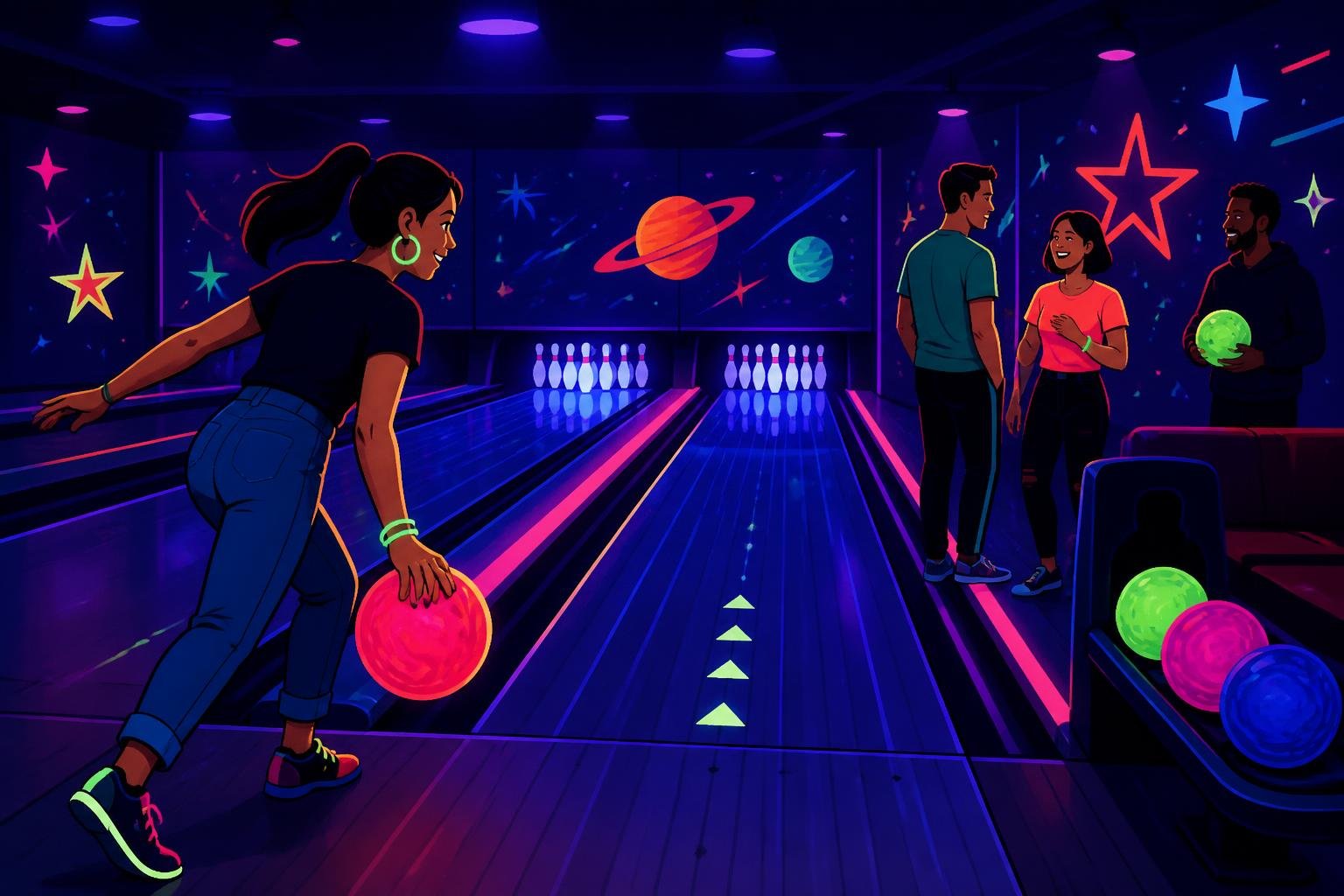
Glow bowling is a bowling center’s black-light event format, usually paired with darker house lights, brighter lane accents, and louder music. Many centers call the same thing cosmic bowling. In everyday conversation, most bowlers use the terms interchangeably and move on. The label matters less than the experience: you are bowling in a room designed to feel more social, more vivid, and a little less ordinary than a standard afternoon session.
That is why you will often see glow bowling offered during weekends, late evenings, holidays, birthday parties, or group events. Some centers schedule it every week. Others only run it occasionally. A few centers never use the name at all, but still offer the same kind of black-light setup under a different title. If you are planning around it, check the center’s schedule instead of assuming the night you want will be available.
Think of it this way: normal bowling is the everyday version, while glow bowling is the event-night version. The lane is still the lane, but the setting is built to feel more lively and more casual. That difference is a big part of the appeal. If you want a fun night out with friends, kids, or a mixed-age group, the atmosphere helps. If you are trying to work on a very specific part of your game, the same atmosphere can be distracting.
That does not make glow bowling less useful. It just means you should know what kind of night you are walking into. A casual bowlers’ night, a family outing, and a league practice session all ask different things of you. Glow bowling is strongest when you want a little energy around the game.
What the room looks and feels like when you first walk in
The first thing you usually notice is contrast. The room is dimmer, but the lanes are easier to spot because bright colors and black lights make certain parts of the space stand out. You may see neon shirts, glowing lane decorations, illuminated seating areas, and pins or graphics that seem to pop against the darker background. Music fills the room too, which changes the pace before you even lace up your shoes.
For a first-timer, that can be exciting and slightly disorienting at the same time. Your eyes are adjusting. Your brain is sorting through more input than usual. The room is busy, but not in the same way a crowded league night is busy. It feels more like a party with lanes attached to it. That is usually part of the fun, but it can also make the first few frames feel awkward even if your actual swing is fine.
If that happens, do not read too much into it. A low-light environment can make any bowler feel a little less settled at first. You are not suddenly worse at bowling because the room is darker. You just need a few shots to calibrate your eyes and get used to the rhythm of the night.
Why some centers call it cosmic bowling
There is usually no technical difference hidden behind the words. In many bowling centers, glow bowling and cosmic bowling describe the same style of event. One center may advertise “cosmic bowling,” another may use “glow bowling,” and both may be talking about a black-light setup with music and a livelier atmosphere.
If there is a distinction, it is usually about branding, not bowling. That is useful to keep in mind when you search for times or compare centers, because using both terms can sometimes help you find the same kind of event under different names.
What Changes on the Lane, and What Stays the Same
The lane itself does not become a different lane just because the lights go down. You are still bowling on ten pins. The foul line is still the foul line. Scores are still scored the same way. The game does not change because the room looks cooler. The core job stays exactly what it was before: send the ball into the pocket, carry pins, and make your spares.
The United States Bowling Congress keeps the rules and etiquette consistent no matter what the lighting is like, which is worth remembering if you are new and worried that glow night comes with a different rulebook. If you want the official version, you can always check the USBC playing rules.
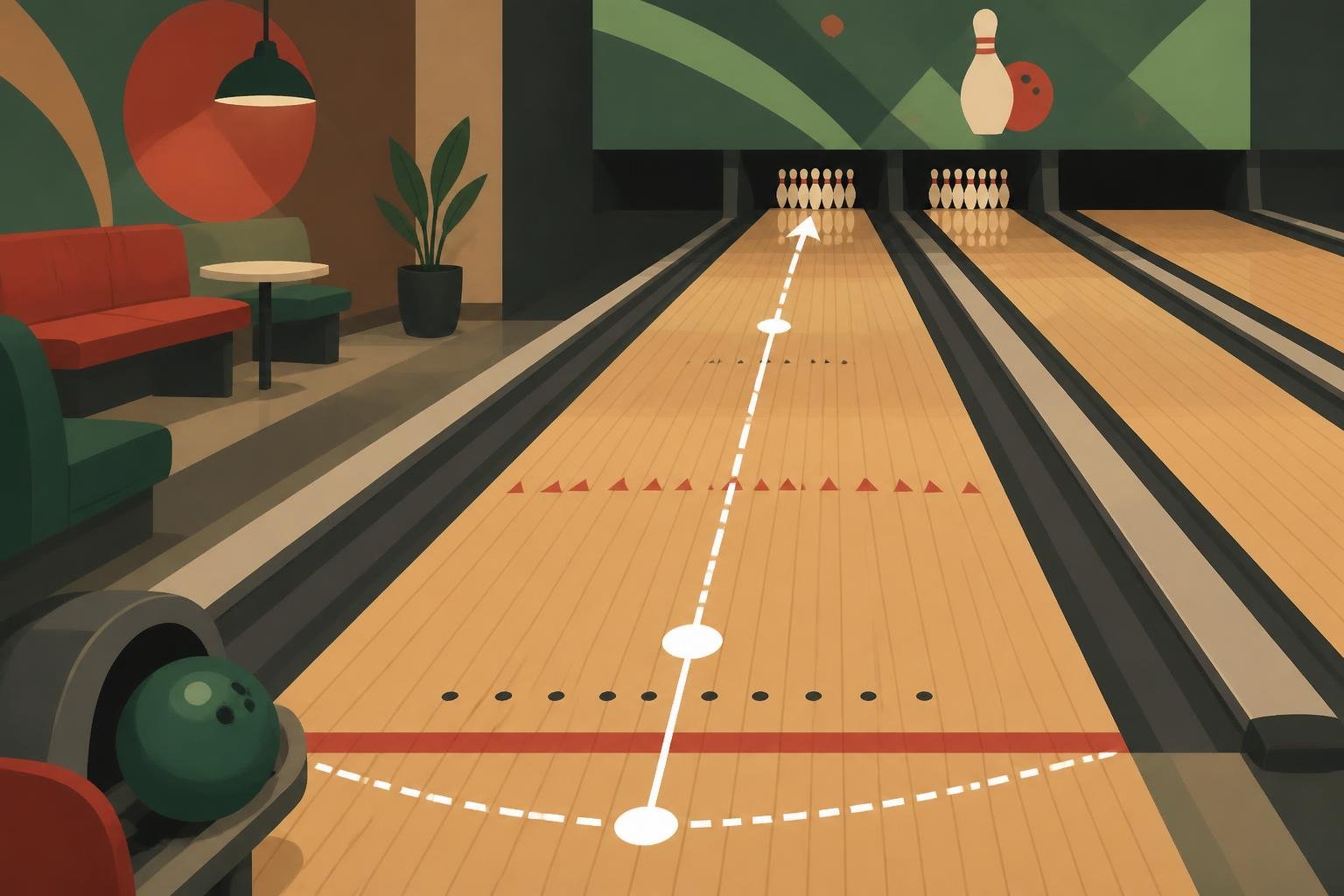
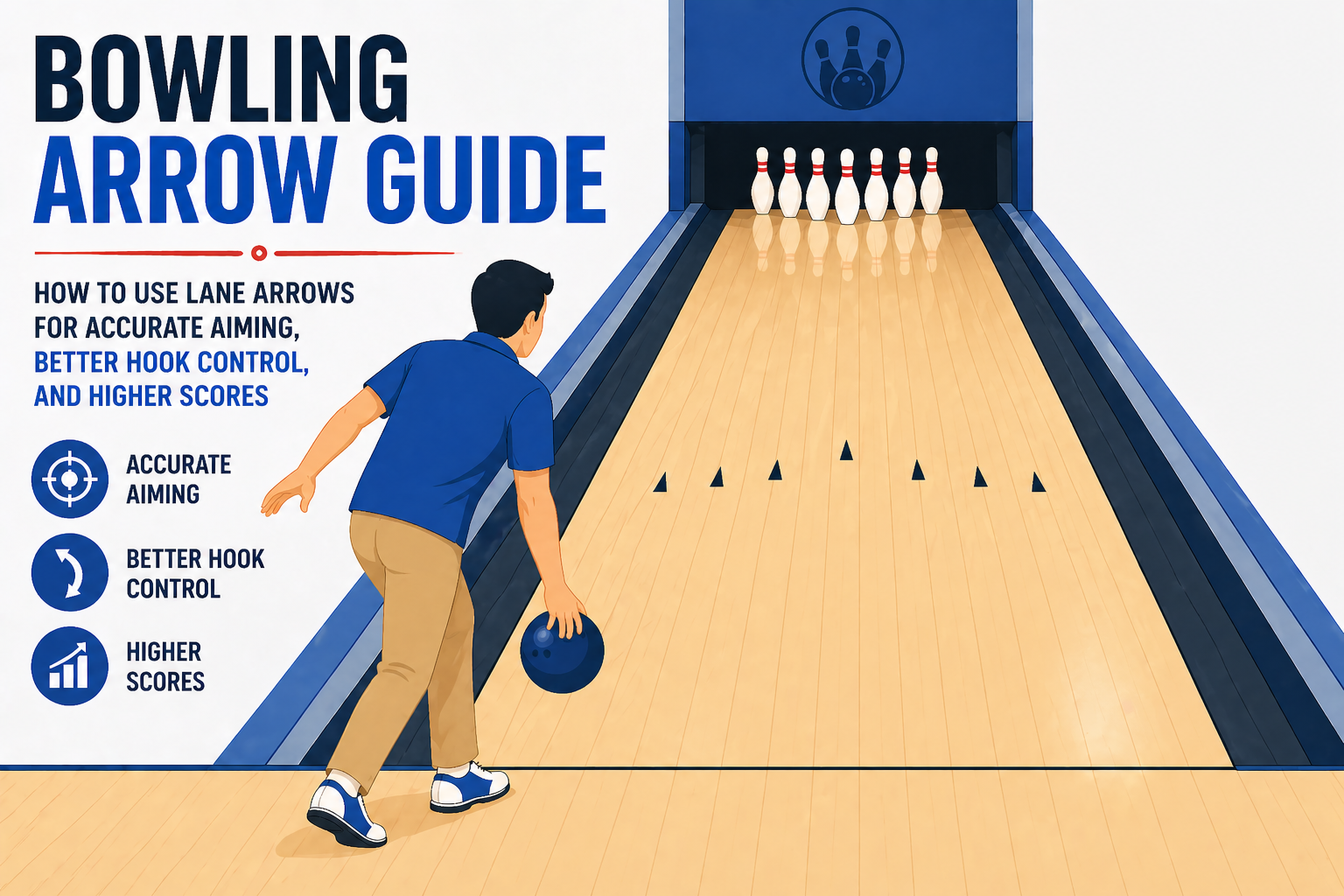
What does change is the way the lane looks to your eyes. In dimmer light, lane arrows and other visual reference points may not jump out at you as quickly. The arrows are still there, and they are still useful. They just may take a second longer to lock in when the room is darker and busier than usual.
That is one reason some bowlers miss their target early in the night even when their mechanics are fine. They are not making a huge physical mistake. They are still learning how the room looks. Once your eyes adjust, the lane usually starts to feel more familiar.
The lane oil itself does not automatically change just because the room is darker. Glow bowling is a setting, not a lane pattern. That said, individual centers can still have different lane conditions on different nights, just as they would on any other schedule. So if the ball reaction surprises you, do not assume the black lights caused it. It may be timing, a small targeting miss, or simply the normal variation you see from one session to another.
Why aiming can feel harder in low light
Your eyes are doing more work in a darker room, especially at the beginning. Contrast matters. If lane markings blend into the background a little more than usual, you may need an extra moment to pick a target and trust it. Your attention is also being pulled in more directions. Bright lights, moving people, music, and conversation all compete with the thing you actually need to focus on.
That is why the first few shots can feel oddly clumsy even if your form is fine. The environment is the problem more often than the swing is. Once you settle in, the lane usually stops feeling quite so strange.
The easiest fix is usually the simplest one: choose one clear target and ignore the rest of the room. You do not need to stare at the pins, the decor, the screen, the ball return, and the crowd all at once. One target is enough. If you try to look at everything, you give your brain too much to manage before the ball ever leaves your hand.
What does not change, even on a glow night
Your stance still matters. Your approach still matters. Your release still matters. Spare shooting still matters even more than usual, because when the room is loud and the setup is flashy, it is easy to get sloppy after a strike or two. Lane courtesy still matters too. The official USBC etiquette guidance is plain about that: stay off the approach until it is your turn, avoid distracting other bowlers, and keep the lane area clear. You can read more in the USBC etiquette information.
There is no special glow bowling release that everyone is supposed to learn. If you already have a simple, repeatable delivery, use it. If your game is still developing, keep it simple. Glow bowling is not the night to reinvent your shot because the lights look cool. It is the night to stay steady while the room tries to pull your attention somewhere else.
What to Wear, Bring, and Expect Before You Roll
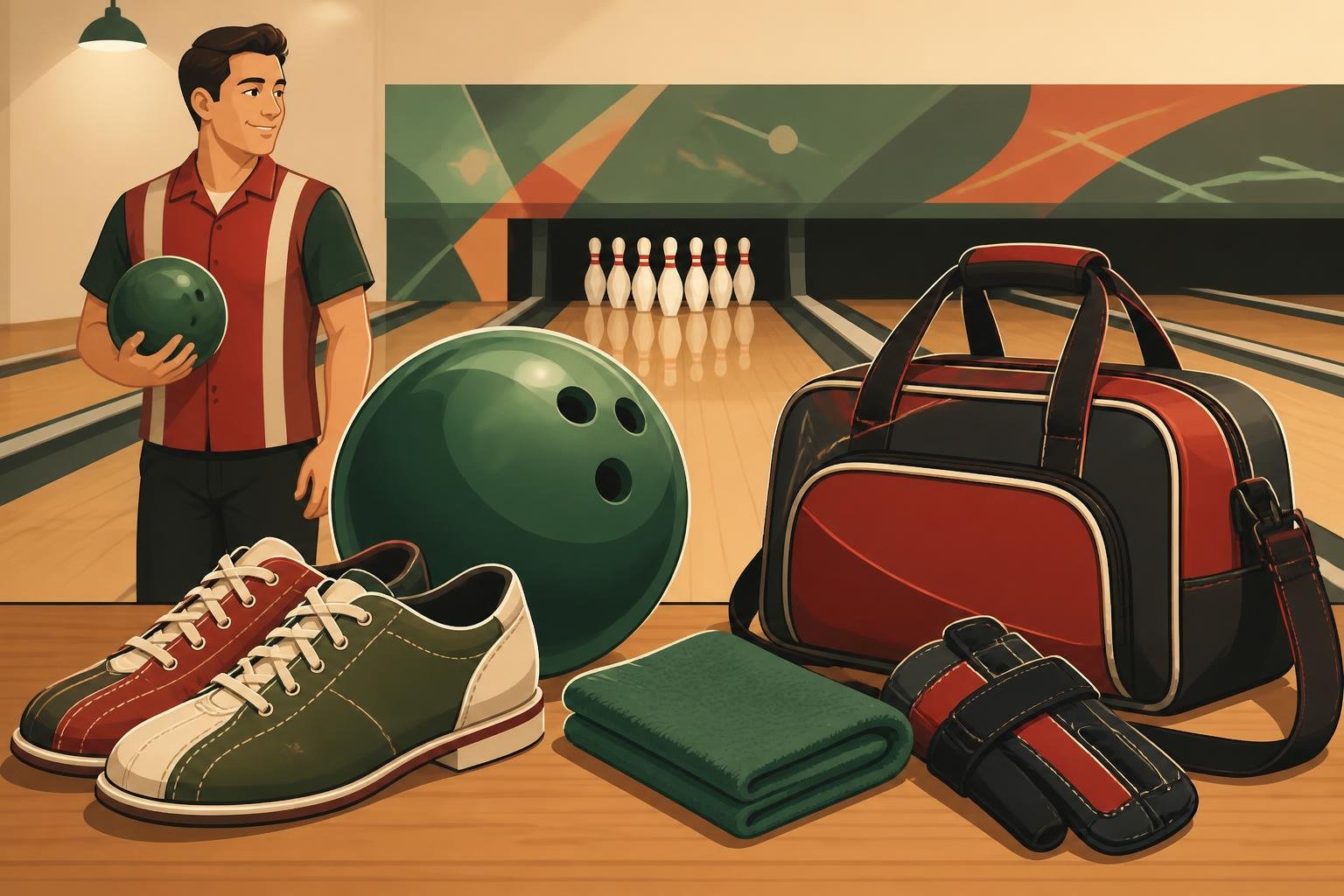
You do not need a costume to enjoy glow bowling. Comfortable clothes are usually the best choice. You want to be able to bend, swing, and slide without feeling restricted. Bright colors and white clothing can look fun under black lights, but they are optional. If you want to lean into the effect, go ahead. If you would rather dress normally and just bowl, that works too.

Comfort should come first. T-shirts, polos, athletic tops, jeans with enough stretch, and casual pants all work if they let you move well. Sleeves should not be so loose that they interfere with your swing, and pants should not be so tight that your slide feels awkward. Black is fine. Neon is fine. The important part is whether you can bowl comfortably.
Bowling shoes are still required in most centers. That part does not change, even if the night feels more casual. If you bowl often, you may already have your own shoes and maybe a few pieces of your own gear. If not, rental shoes and house balls are enough for most casual outings. If you want a clearer picture of what is useful for a newer bowler, the bowling gear for beginners guide is a solid place to start. It helps you sort out what is actually worth bringing or buying.
For a family outing, think practically. Kids often love the glow effects, but the extra stimulation can wear them down faster than adults expect. Noise, lights, and movement all add up. Snacks, water, and a realistic time limit can make the night much smoother. If the center has lighter balls, bumpers, or ramps, those can help younger bowlers stay engaged instead of getting frustrated after a few awkward shots.
For a friend group, the big thing is pacing. Glow bowling naturally creates a social rhythm because people talk between shots, grab food, and react to each other’s frames. That is part of the appeal. But it also means the night can slow down if nobody is clear about how competitive or casual the group wants it to be. If one person is expecting a brisk game and another is treating it like a hangout, tension tends to show up by frame two or three. It helps to set expectations early.
What to pack for kids, friends, or a mixed group
At minimum, bring socks, a payment plan for games and shoes, and a little patience if you are bowling with kids or first-timers. If the center has a snack bar or allows food purchases, that can help a longer outing stay pleasant. Wipes are useful, especially if children are involved. Somehow they always get sticky before the first frame.
For younger kids, it also helps to think about noise. Some children do fine with loud music and flashing lights. Others get overwhelmed faster than you expect. If your group includes both types, be ready to step out for a minute, get water, or shorten the night if needed. Glow bowling should feel fun, not like you are forcing everyone through an endurance test.
If the center allows lane reservations, that is worth checking before you go. Glow nights can get busy, especially on weekends, holidays, and during school breaks. A reservation can save you from waiting around while everyone in your group gets more excited and less patient.
What to expect when you arrive
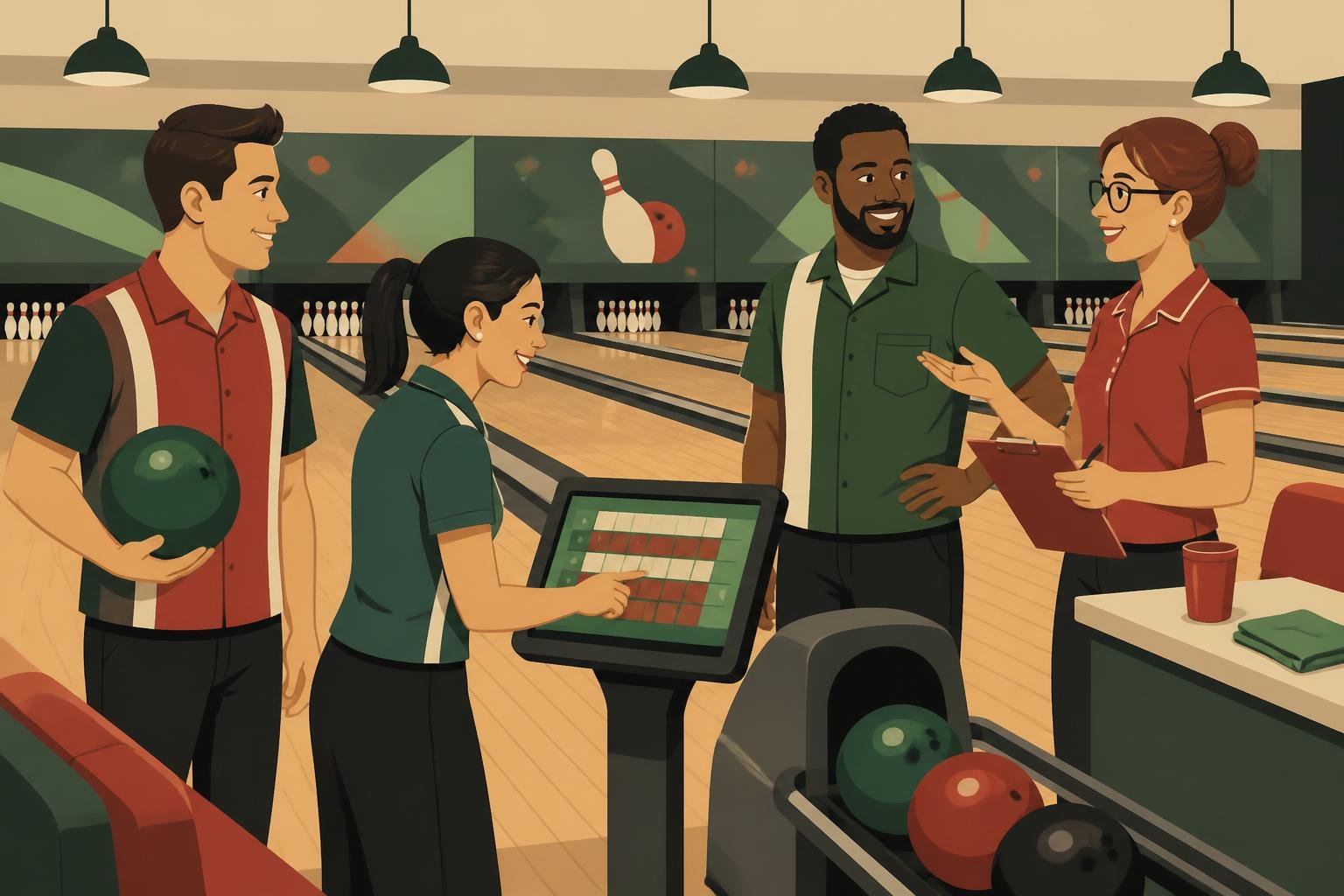
Most centers will seat you, get your shoes sorted, and point you toward your lane just like they would on any other night, but the pace may be a little less predictable. A glow event often means more traffic near the front counter, more people moving between lanes, and more background noise. That is normal.
Give yourself a few minutes to settle in. If you are bowling with kids, let them look around before the first frame starts. If you are with friends, resist the urge to rush straight into the game before everybody understands where their lane is, who is keeping score, and whether food is coming first. A little organization at the start makes the rest of the night easier.
How to Bowl Better When the Lights Are Low
The first thing to remember is that glow bowling usually rewards simplicity. The environment gives you enough to think about already. You do not need a fancy target system, a dramatic speed change, or a different release because the room is darker. You need a clear target, a steady routine, and enough patience to let your eyes adjust.
If you are newer to the sport, this is a good night to focus on the basics from bowling tips for beginners. The same advice applies here: keep your approach repeatable, stay balanced, and make one adjustment at a time instead of changing everything after every frame. That matters even more when the setting is loud or visually busy.
Think of it this way. On a glow night, your job is not to outsmart the room. Your job is to make the room less distracting by giving yourself a simple plan. Pick a target. Walk the same way. Swing the same way. Finish the same way. Then watch what the ball does and make small changes only when you have a reason to.
Pick one target and trust it
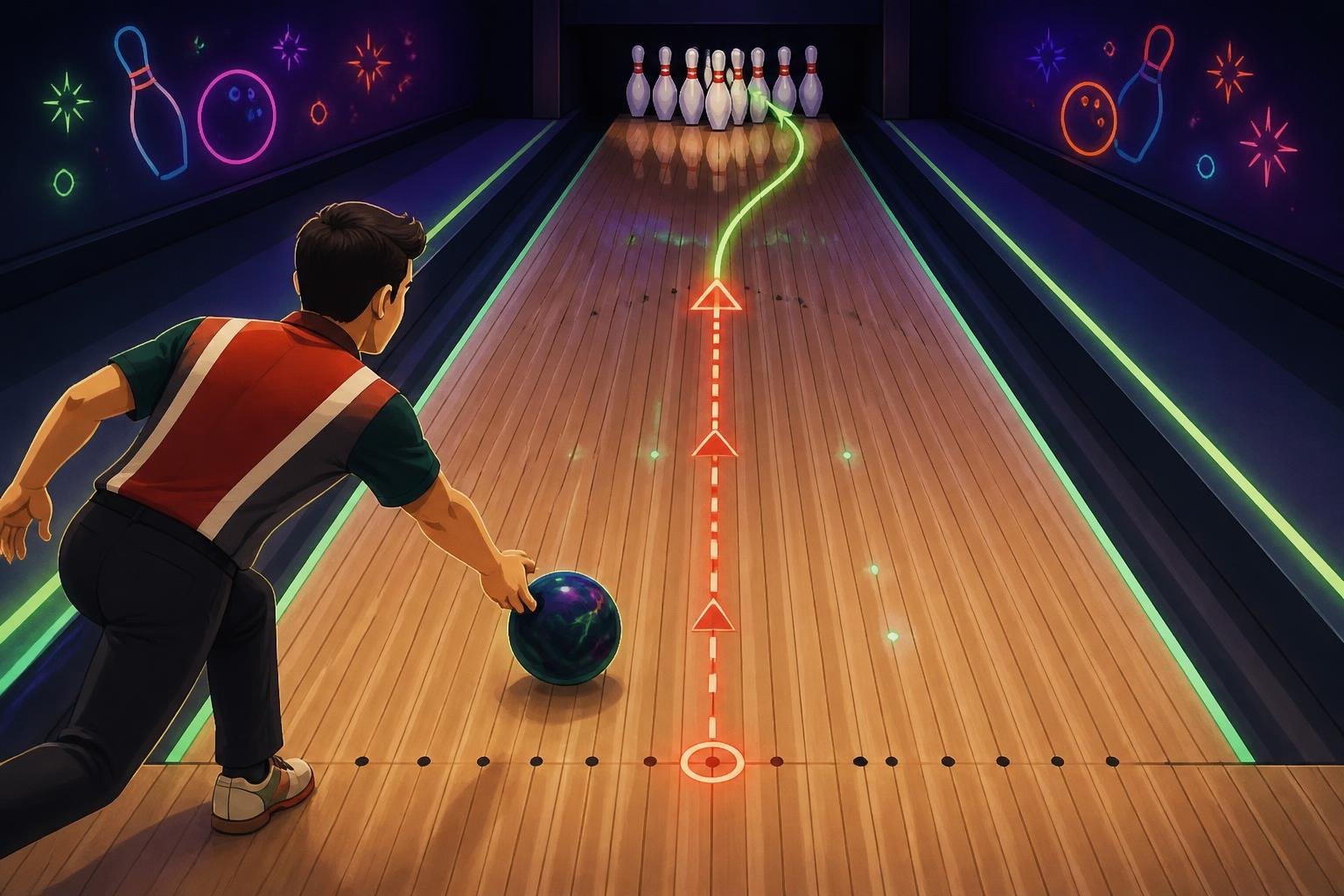
When the lighting changes, bowlers often make the mistake of looking everywhere except the one reference point they actually need. That usually leads to hesitation. The simplest answer is to choose one lane target and commit to it. For most bowlers, that target is one of the lane arrows, not the pins.
The arrows are there for a reason. They give you a close-in reference that is much easier to aim at than the pins themselves. In dimmer light, they may take a little extra effort to see, but the target is still there. If you already know which arrow or board you normally use, start there. If you do not, pick a consistent line and watch the ball reaction from frame to frame.
One practical way to think about it is this: you do not need a perfect read of the whole lane. You need one spot that helps you send the ball where you want it to go. If you try to aim by staring at the head pin every time, you may feel even less stable in a darker room.
If you want a clearer explanation of why bowlers lean on that part of the lane, the bowling arrow guide breaks it down in plain English. It is useful whether you bowl glow nights, league nights, or both.
Keep your feet and swing simple
Glow bowling is not the time to speed up because the music is loud or to rush because the room feels lively. A rushed approach is one of the fastest ways to lose timing. Keep your start calm, walk at a pace you can repeat, and let the ball swing rather than forcing it. That advice sounds basic because it is basic, and basic is useful when the setting is trying to distract you.
If you usually take a short pre-shot routine, keep it. If you stand behind the approach, take a breath, pick a target, and step into the shot, do that again. If you rely on a smooth finish and a balanced follow-through, keep that too. Glow bowling can tempt you to overreact to the atmosphere, but your score improves when your body does less improvising.
If your release feels off in the dark, do not immediately assume you need more power. Power often makes things worse when you are still adjusting visually. A controlled swing and a clean follow-through are usually more helpful than trying to throw harder because the room feels bigger or louder.
Use your pre-shot routine as a reset button
One of the best tools you have on a distracting night is a repeatable routine. It does not have to be fancy. You might step back, look at your target, breathe once, set your feet, and start. That simple pattern gives your brain something familiar to latch onto when everything around you feels a little louder than usual.
If you miss a shot, the routine matters even more. Do not carry the last miss into the next frame. Step back, look at the lane again, and go through the same sequence. Glow bowling can make people emotionally react to every frame because the room feels lively. A routine keeps you from getting pulled around by the atmosphere.
Spare shooting becomes your best friend
On a lively night, strikes feel exciting and spares can feel boring. That is exactly why spares deserve attention. Casual bowlers often chase the highlight shot and then leave easy pins standing because they lose focus after the first ball. If you can keep your spare routine steady, you protect your score even when the atmosphere is distracting.
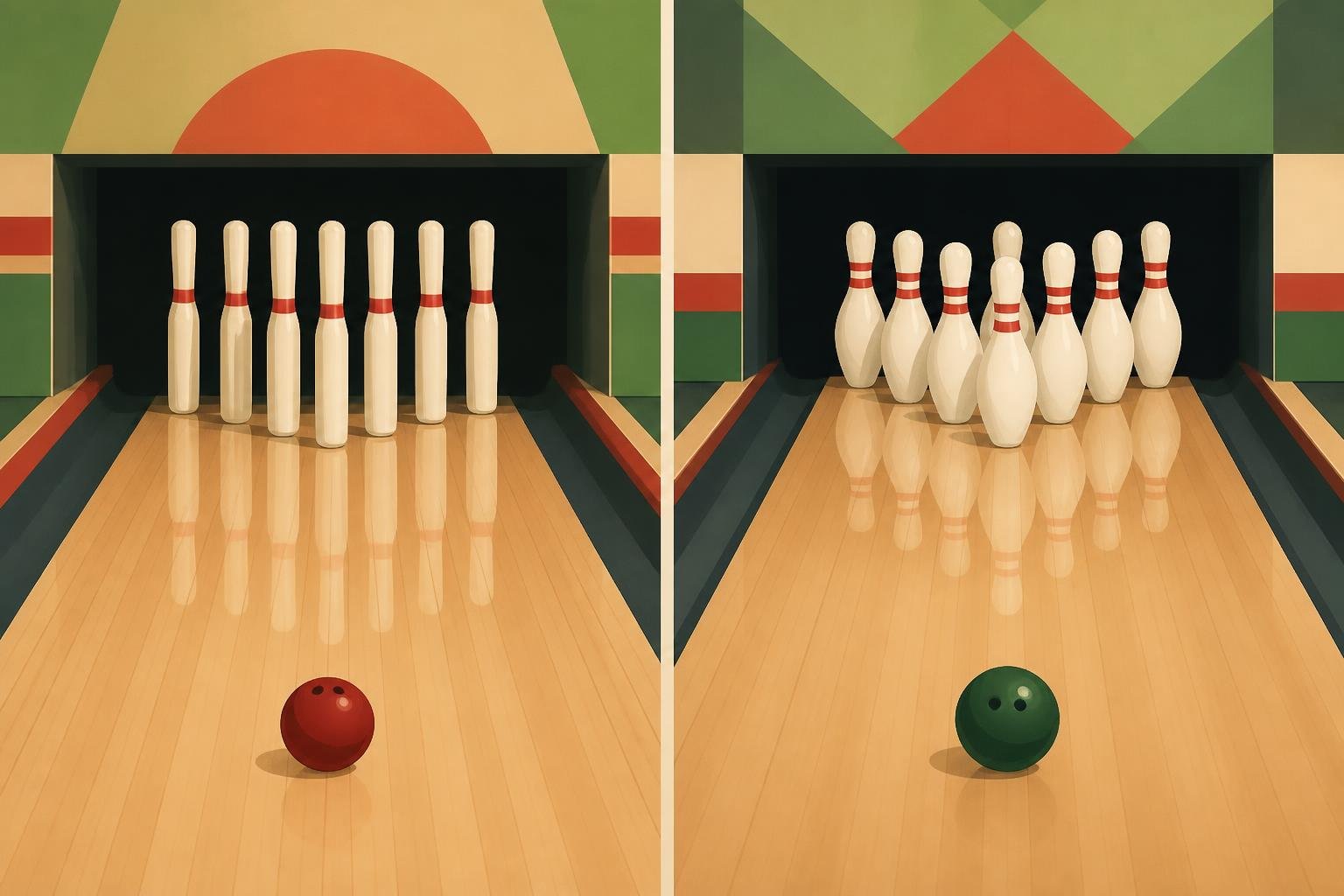
It helps to keep spare shooting plain and repeatable. Use a line you trust, roll the ball straighter, and remove unnecessary motion. Many bowlers use a different spare shot than they do on the strike ball, because a straighter ball is easier to control. If you want to understand the language bowlers use when talking about awkward pin leaves, the bowling pin formations explained article is a useful companion. It makes split leaves and other tricky setups less mysterious.
If you are only bowling for fun, spare shooting still matters. A few good spare conversions can make an average glow bowling night feel much better, even if you are not stringing together strikes. In a noisy room, that steadiness often stands out more than one lucky strike anyway.
How to adjust if the lane feels different than usual
When a shot misses, your first instinct may be to change something big. Resist that. Make one small adjustment and give it a few frames. Move your feet a board or two, or slightly change your speed, then watch the ball reaction. If the ball is missing the target in the same direction over and over, a small move is useful. If one shot looks strange and the next one is fine, that may just be a normal miss.
Glow bowling can make people feel like every mistake is caused by the atmosphere. Often it is not. One bad shot is still just one bad shot. Give yourself enough frames to see a real pattern before you change your whole line.
That is especially true if you usually throw a hook. The ball reaction may look more dramatic in the darker room, but the lane is not doing something mysterious just because the lights are low. Watch the carry, watch the entry angle, and make small corrections. If you want a broader reminder of the habits that support that kind of adjustment, the beginner bowling tips guide is worth keeping in mind.
Glow Bowling Etiquette, Safety, and Center Courtesy
Glow bowling tends to be louder and busier, which means normal etiquette matters even more. When the room is energetic, it is easier for people to miss cues, step into the approach too early, or forget that somebody else is trying to concentrate. The basics still apply: wait for your turn, keep the approach clear, and be aware of the lane next to you.
The USBC etiquette guidance is practical here, not fussy. It asks you to respect the bowler on the lane beside you, avoid stepping onto the approach when it is not your shot, and keep walkways and lane areas clear. You can find the official reminder in the USBC etiquette information sheet. In a glow setting, those habits matter because the lighting and crowd can make it harder to notice what everyone else is doing.
Safety matters too. Darker rooms can hide spills around the seating area or near food tables. Shoes that are too slick, too loose, or simply not tied well can make the approach feel unstable. Kids may wander toward the lane when they are excited. And nobody should be throwing a ball until the pinsetter has finished its cycle and the lane is ready. Bowling centers are built for fun, but the lane area still has moving equipment and a few obvious hazards if people stop paying attention.
One thing people forget is how easy it is for gear to end up underfoot. Bowling bags, drinks, jackets, and dropped wrist supports can all create little trip hazards if they are left in the wrong place. If your group is big, keep the area around your seats neat. It is a small habit, but it prevents a lot of dumb problems.
Courtesy in a louder, busier room
When the room is loud, people often assume everything should be louder. That is not really how it works. Celebration is fine. Yelling over every shot is not. A reasonable cheer after a strike or a funny miss is normal, especially if your group is having a good time. What you want to avoid is distracting bowlers who are trying to take their turn or making the night miserable for the group beside you.
If your group is naturally energetic, build in a little self-awareness. Take your celebration a step back from the approach. Keep drinks and bags out of the way. Let the bowler on each lane finish without stepping across the front of their view. That kind of courtesy keeps the evening pleasant for everyone.
Safety details people forget
People often remember the fun parts and forget the practical ones. Bowling shoes need enough traction to keep you stable, and spilled drinks can make the floor much more slippery than it looks. Children should not be left unsupervised near the ball return or on the approach. And if a lane is still cycling pins or the machine has not finished, wait. The extra few seconds are worth it.
Parents should also watch for overexcitement. Kids may want to run up to the lane because the black lights make everything look like part of the event, but the approach is not a playground. A simple reminder before the first frame usually helps.
If you are bringing noise-sensitive kids, a quick side note can help. Some children do better if they know ahead of time that the music will be loud and the room dim. That way, they are prepared instead of surprised. A little expectation-setting goes a long way.
Choosing the Right Glow Bowling Night for Your Group
Not every glow bowling night is built the same way. Some centers market it as a party event, some as a weekly feature, and some as a special package with food or music. The right choice depends on who is coming and what you want out of the evening. A family with younger children will likely want a different setup than a group of friends, and both may want something different from a league bowler who just wants a looser practice night.
That is why it helps to ask a few basic questions before you go. Is the event mostly for fun and socializing, or does the center expect people to bowl continuously? Are reservations recommended? Are lane minimums or time limits involved? Is the night busy enough that walk-ins could mean waiting? Those answers matter more than whether the flyer looks exciting.
It also helps to know how you want the night to feel. If you want a relaxed family outing where kids can bowl a few frames, eat snacks, and enjoy the lights, one style of glow event will make sense. If you want a louder group hangout with music and some photo-worthy visuals, another setup may fit better. If you are a league bowler who wants to keep your touch without taking things too seriously, a quieter or shorter glow session may be enough.
For newcomers, glow bowling can be a useful entry point into the sport. The atmosphere feels less formal than a league night, so you can get used to the lane without feeling like every shot is under a microscope. If you eventually want a more structured experience, you can always move from a glow night to a regular night or even explore how bowling leagues work later on.
Best fit for families
Glow bowling can work very well for families because it gives kids something visually interesting to focus on. The black lights, music, and glowing elements make the night feel special without requiring anybody to know much about bowling. If the center has bumpers or lighter balls, that can keep younger bowlers engaged longer and reduce frustration.
The main watch-out is stimulation. Young kids who are thrilled for the first game may fade quickly once the novelty wears off. If you plan for that, the night tends to go better. Keep the expectations modest, and let the glow factor be part of the fun rather than the entire reason to stay.
For a family outing, it can also help to talk about turn order ahead of time. Kids often do better when they know when their turn is coming instead of waiting and wondering. It sounds small, but it can prevent a lot of wandering and attention loss.
Best fit for friend groups and parties
Glow bowling is a natural fit for birthdays, casual gatherings, and nights when the bowling is only part of the plan. If your group likes music and a looser pace, it can feel like an easy social outing. Just keep in mind that larger groups can slow the game if everyone wants to talk between every shot. That is not a problem if you have the lane time for it, but it is worth setting expectations so no one gets annoyed halfway through the second frame.
If you are trying to share a lane with a lot of people, the game will move more slowly. That may be fine for a party, but less ideal if someone in the group wants a more efficient round. A smaller group or a paired lane setup is often smoother.
It also helps to decide whether the night is about bowling first or hanging out first. If nobody says it out loud, you can end up with one person trying to keep score seriously while another is halfway through a snack and a conversation. That mismatch is easy to avoid if you set the tone early.
Best fit for league bowlers who still want some practice
If you bowl in a league, glow bowling probably is not the best setting for serious pattern reading or technical testing. The visual distractions are real, and you will usually get more value from a regular practice session when you want focused repetition. That said, a glow night can still serve a purpose. It can be a useful low-pressure chance to work on spare shooting, keep your rhythm loose, or simply enjoy the sport without analyzing every frame.
Think of it as fun with a little useful work attached, not as your main improvement session. If you have been tense about your game, a casual glow night can also be a good mental reset. Sometimes that matters more than another round of self-critique.
What Glow Bowling Costs and How to Avoid Surprises
Prices vary a lot by center, day of the week, time of night, and what is included. Some places charge by the game, some by the hour, and some offer packages that bundle lane time, shoe rental, and food. Glow bowling nights may cost more than an off-peak daytime session, especially if they are promoted as an event. The safest move is to check the center’s current pricing before you show up.
Also ask what the price actually includes. Are shoes extra? Is lane time capped? Do you need to reserve a lane? Is there a minimum number of bowlers per lane? Are there age restrictions for certain glow bowling events? These are not exciting questions, but they are the ones that save you from standing at the counter doing math while everyone in your group starts losing patience.
Some centers make pricing simple, others do not. If the website is vague, call ahead. A two-minute phone call can prevent a lot of confusion later. Availability and setup can vary by location, which is part of why one center’s cosmic bowling night may look a little different from another’s.
If you are planning for a family or group outing, it also helps to compare the total cost, not just the lane price. Shoes for multiple people, food, drinks, and any add-ons can change the final number pretty quickly. Sometimes a package is the easier choice because it simplifies the whole night. Sometimes it is not worth it if your group only wants a couple of games and no extras.
Questions to ask before you go
If you want the short checklist, ask these questions before you leave home:
- What time does glow bowling start, and how long does it run?
- Do we need reservations, or can we walk in?
- Are shoe rentals included?
- Is there a lane minimum or time limit?
- Are kids allowed, and are bumpers available?
- Are food and drinks included, or separate?
Those answers tell you almost everything you need to know about the night. If a package seems expensive, compare it to the total cost of games, shoes, and food bought separately. Sometimes the package is worth it. Sometimes it only feels worth it if your group really wants the convenience.
Glow Bowling Glossary for First-Timers
One of the quickest ways to feel comfortable on a bowling night is to know the few terms people use all the time. You do not need to memorize a giant glossary. Just learn the basics and the conversations around the lanes become much easier to follow.
The USBC’s coaching and glossary materials use the same core words bowlers hear everywhere, including strike, spare, open frame, foul line, pocket, split, and arrows. If you want the official style of definitions, the USBC quick reference glossary is a useful source. Here, though, is the plain-English version you actually need for a glow bowling night.
The terms that matter most tonight
- Strike: You knock down all ten pins on the first ball of the frame.
- Spare: You knock down the remaining pins with your second ball.
- Open frame: You do not get all ten pins with the two balls in the frame.
- Pocket: The ideal entry point into the pins, usually between the 1 and 3 pins for right-handers, or 1 and 2 pins for left-handers.
- Arrows: The marks partway down the lane that many bowlers use as aiming points.
- Foul line: The line you must not cross when you deliver the ball.
- Split: A tough pin leave after the first ball, usually with pins separated in a way that makes the spare harder to convert.
If someone says, “That was a bad split leave,” they are talking about the pin setup after the first ball. If someone says, “Hit the pocket,” they mean the preferred entry area for a strong shot. Those are the kinds of phrases you will hear even on a casual glow night, so it helps to recognize them.
When Glow Bowling Is Fun, and When It Is Not
Glow bowling is a good fit when you want the social side of bowling to matter as much as the score. It works especially well for birthdays, family outings, date nights, and groups of friends who want music and a more relaxed atmosphere. The bright visuals and extra energy can make the game feel more welcoming for people who do not bowl often.
It is less ideal if you want a calm practice environment, detailed lane reading, or a quiet place to work on mechanics. The low light and busier atmosphere can make it harder to focus on small technical adjustments. If you are trying to study your release, repeat one target line over and over, or get serious about spare systems, a regular session may suit you better.
That does not mean glow bowling is only for entertainment. It can be a nice bridge for newer bowlers. You get enough structure to practice the real game, but the setting is less intimidating than a formal league night. If that helps you enjoy bowling enough to keep coming back, it has already done its job.
Signs you will probably enjoy it
You will likely like glow bowling if you enjoy music, bright visuals, a looser pace, and a more social atmosphere. If you are taking kids, bringing a group, or just want the night to feel a little different from the usual routine, the format usually works well.
You will also probably enjoy it if you do not mind a little visual adjustment time at the start. Some people settle in quickly. Others need a few frames before they feel like they are seeing the lane clearly again. Neither reaction is unusual.
Signs a regular bowling night may suit you better
If you want quiet, repetition, coaching, or score-focused practice, a standard bowling night is probably the better fit. You will see the lane more clearly, hear yourself think, and have fewer distractions when you are trying to fix a particular part of your game.
That is especially true if you are working on consistency. A regular night gives you a cleaner read on your mechanics, ball reaction, and spare routine. Glow bowling is still useful, just in a different way.
A few simple next steps before your glow bowling night
If you are planning to go soon, you do not need to overthink it. Check whether the center offers glow bowling on the night you want. Ask about reservations and shoe rental. Decide whether you are there mostly for fun, practice, or a little of both. Dress comfortably. Bring socks. If kids are coming, plan for shorter attention spans and a slower pace. If you bowl regularly, keep your targeting simple and use the night to stay steady, not flashy.
Most of all, remember that glow bowling is still bowling. The lights are different, the room feels busier, and the soundtrack is louder, but the core idea does not change. Hit your target, control what you can control, and give yourself a little grace if the first frame or two feel strange. That is normal. Once your eyes and timing settle, the night usually becomes much easier to enjoy.
If you want to keep building your bowling basics after a glow night, the most useful next steps are usually the ones that help you understand your gear, your targeting, and your spare game. Those are the parts that travel with you from a casual cosmic session to a regular league night, and they matter in both settings.