If you have ever stood on the approach, looked straight down the lane, and thought, “This cannot really be much more than 60 feet,” you are not alone. Bowling lanes have a way of looking shorter than they are. The shiny surface, the arrows, the pin deck, and the gutters all squeeze the distance visually, especially if you are new to bowling or only get out there once in a while.
So, how long is a bowling lane? The number most bowlers mean is 60 feet from the foul line to the head pin. If you are talking about the full lane reference measurement used for installation and specs, the lane is longer than that, because the pin deck sits beyond the playing surface. That is where the number 62 feet, 10-3/16 inches comes in.
Both answers are correct. They are just measuring different parts of the setup. Once you know that, the lane markings start making more sense, and the whole place stops feeling like a long blank strip with ten pins on the end.
The number bowlers usually mean
60 feet from the foul line to the head pin
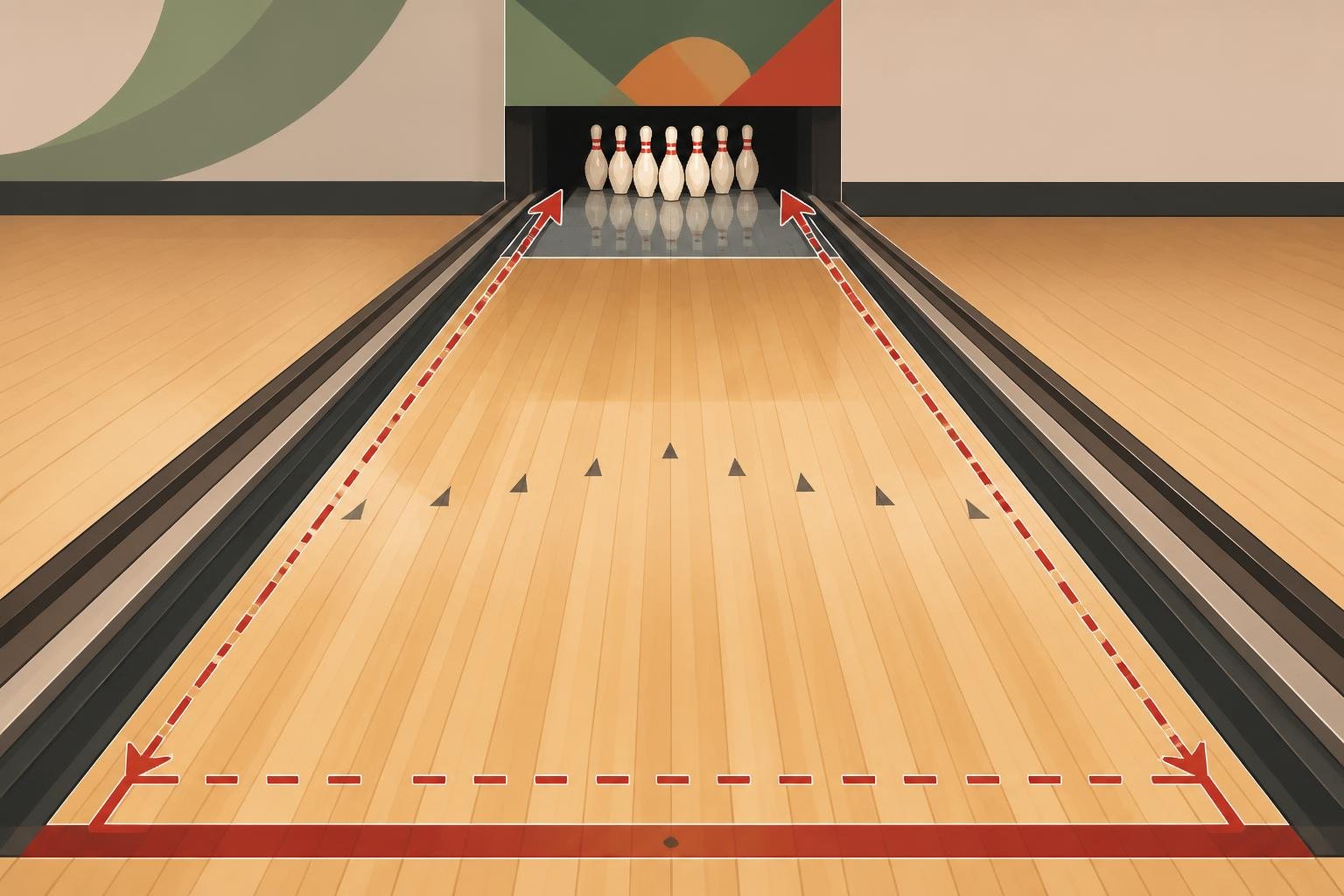
When most people ask how long a bowling lane is, they mean the playing surface from the foul line to the head pin. That distance is 60 feet. It is the part of the lane your ball actually travels over before it reaches the pins.
That is the simplest and most useful answer for everyday bowling. If you are talking with a friend, watching league night, or trying to understand where your shot is going, 60 feet is the number that matters most.
It also explains why the lane can feel deceptive. Sixty feet is longer than it looks from the foul line, but not so long that the ball has all day to wander. A small change in your release or target can turn into a big difference by the time the ball gets to the pins. On a bowling lane, distance has a way of making tiny mistakes look much larger than they felt when you let go.
Why some lane specs list 62 feet, 10-3/16 inches
If you start reading lane specifications, you will eventually see the longer measurement: 62 feet, 10-3/16 inches. That figure includes the pin deck, which sits behind the 60-foot playing surface.
That is not a contradiction. It is simply a different way of measuring the installation. One number tells you how long the ball rolls before it reaches the pins. The other tells you the full reference dimension of the lane assembly.
For most bowlers, the 60-foot answer is the one to remember. For people who care about certification, lane construction, or equipment specs, the longer measurement matters too. If you keep those two ideas separate, the whole topic gets much easier.
How the lane is laid out
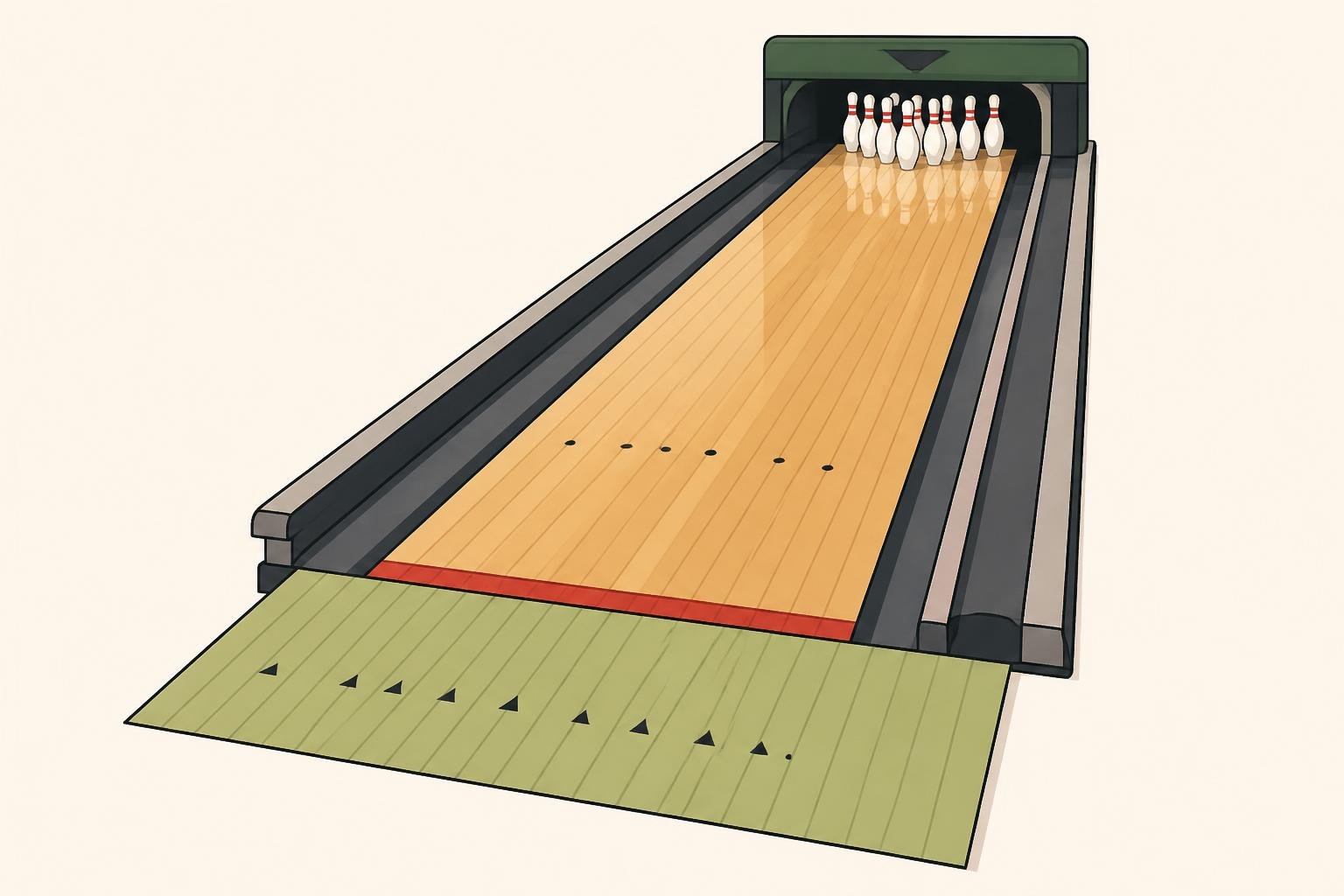
Think of it as sections, not one long slab
It helps to stop picturing a bowling lane as one single rectangle. It is really a few connected sections, and each one has a job.
- The approach, where you take your steps and release the ball.
- The foul line, which marks the start of the lane itself.
- The lane surface, the 60-foot playing area the ball travels across.
- The gutters or channels, the troughs on both sides that collect stray shots.
- The pin deck, where the pins stand at the far end.
Once you see the lane in pieces, it becomes easier to understand what you are looking at. The approach is not just floor space. The foul line is not a suggestion. The lane surface is not there to look pretty. And the pin deck is not part of the 60-foot playing distance, even though it is part of the overall lane installation.
The approach is part of your shot too
The approach is the area you walk on before releasing the ball, and it matters more than most casual bowlers realize. USBC equipment specifications call for an approach of at least 15 feet. That gives you enough room to set up, take your steps, and slide without crowding the line.
Different centers can feel slightly different under your feet. Some approaches are smoother. Some feel a little tackier. Some make you feel like you have plenty of room, while others seem tighter, even though the lane itself is built to standard dimensions. That is why a bowler can walk into a new house and immediately notice, “This feels different,” before even taking a practice shot.
The approach is where your timing starts. If your steps are rushed or off balance, your release usually shows it. If your setup is calm and repeatable, your ball has a better chance of coming off your hand the same way every time. That is why good bowlers pay attention to where they start, not just where the ball ends up.
The lane is narrow, which is why targeting matters
A regulation lane is only about 41 1/2 to 42 inches wide, or 39 boards across. That surprises a lot of people. The lane looks wide from the approach, but once you step up and really read it, you realize you are working with a fairly narrow target area stretched out over a long distance.
That narrow width is one reason bowlers talk about boards so much. Boards give you a shared language for a lane that is measured in inches but played in fractions of space. Instead of saying, “I moved a little right,” you can say, “I moved two boards right.” That is much more useful if you are trying to repeat a shot or make a small adjustment.
The narrow lane also explains a common beginner problem. Your shot may look close at the foul line, but by the time it reaches the pins, it can miss by a lot. On a lane this slim, little changes in your feet, swing, or release do not stay little for long.
What the lane markings are trying to tell you
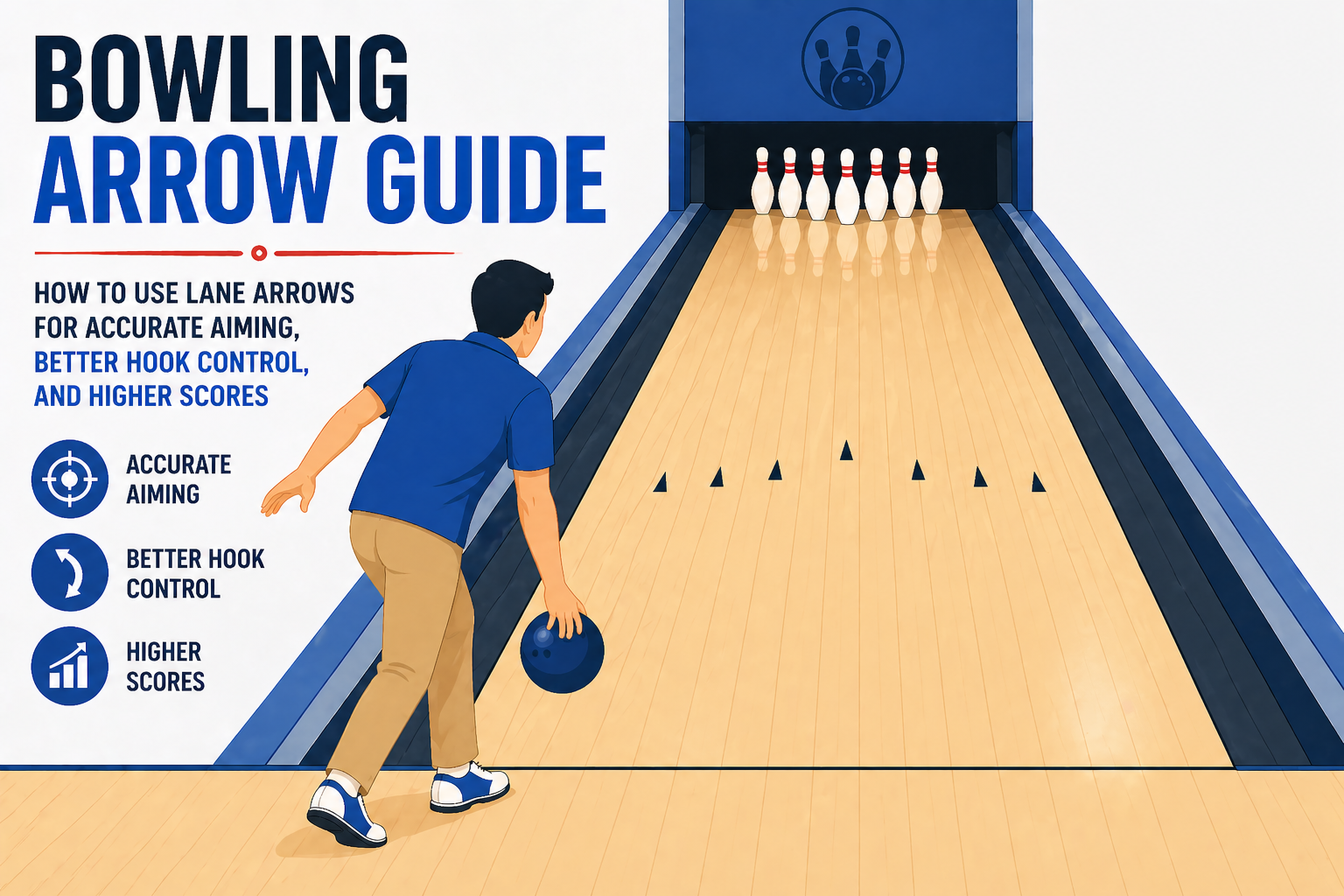
The arrows are there so you do not have to aim at the pins
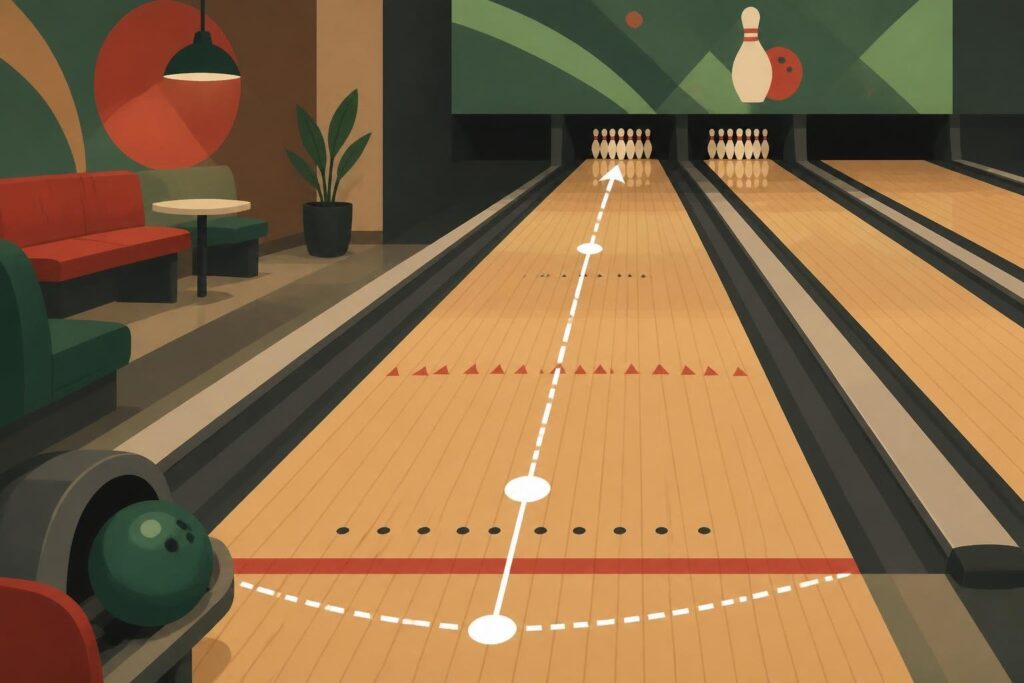
The arrows are one of the most helpful markings on the lane, especially if you are still learning. There are seven arrows on each lane, and they sit roughly 12 to 16 feet from the foul line. Their job is simple: give you a target that is easier to see and more repeatable than the pins.
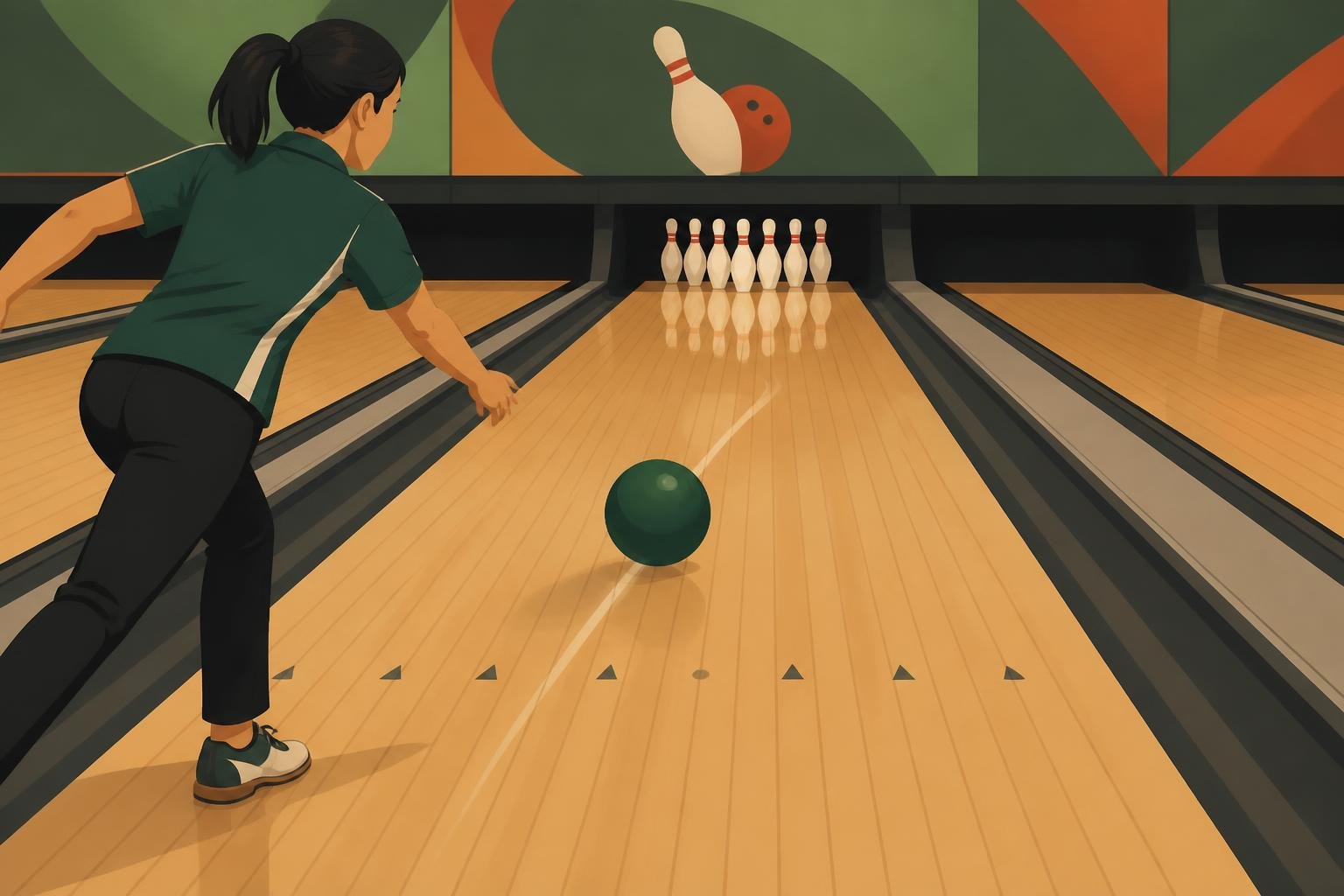
That may feel backward at first. The whole point of bowling is to knock down the pins, so why would you aim somewhere in the middle of the lane? Because the lane gives you much better visual information closer to you than it does at the far end. The arrows are meant to help you send the ball on the right line.
If you stare only at the head pin, you often end up chasing the result instead of setting up the shot. Aiming at an arrow gives you a reference point you can actually use. Your eyes are working on a visible target, your feet can be in a consistent place, and your ball gets a clear path through the lane.
That is why so many bowlers eventually stop thinking, “Hit the pins,” and start thinking, “Roll over this arrow.” The pins are still the goal. The arrow is simply the better place to focus if you want repeatable results.
Boards make the lane easier to read
Under the surface markings, the lane is divided into boards. Those boards are what bowlers count when they talk about alignment, starting position, or where a ball crosses the lane. This is the part that turns bowling from guessing into something you can actually adjust.
Say you are right-handed and you keep leaving the ball a little right of the pocket. If you know which board your feet start on and which board your ball crosses at the arrows, you do not need to reinvent the whole shot. You can move one or two boards and see what changes. That is a lot easier than trying to “throw better” in some vague, hard-to-repeat way.
Left-handers use the same system from the other side of the lane. The markings do not change. Your reference point changes. That mirrored setup can confuse beginners at first, especially when someone at league night says, “I started on board 20.” They are simply counting from their side.
The dots on the approach help you start in the same place
The dots on the approach are there to help with your feet and alignment. They are not aiming points for the ball. They are starting references for your stance.
Some centers use five dots on the back of the approach, and others use seven. The exact count can vary, so the safest thing is to use the dots you see in front of you instead of assuming every house looks the same. What matters is that the dots help you set up consistently from frame to frame, and from visit to visit.
If you have ever stood up there thinking, “Where was I supposed to begin?” the dots are your answer. Pick a starting point, use it again next shot, and make small adjustments only when you need them. That simple habit does more for your game than most people expect.
Closer lane dots can help when the arrows are hard to see
USBC materials also describe additional dots on the lane itself, closer to the foul line, about 7 to 9 feet out. These can be useful when the arrows are hard to read, the lighting is odd, or you are bowling in a brighter or more stylized setting where the lane finish makes the farther markings less obvious.
That is one reason lane reading is not only about memorizing where the arrows sit. It is about learning what visual cue helps you make a clean, repeatable shot in that specific building. Sometimes the answer is the arrows. Sometimes it is a closer dot. Sometimes it is a combination of both.
Why 60 feet affects the way your ball moves
Your ball has time to skid, hook, and roll
Lane length matters because a bowling ball does not move the same way for the entire trip. It usually goes through three general phases: skid, hook, and roll. That means the ball is traveling, reacting to the lane, and then finishing its move into the pins.
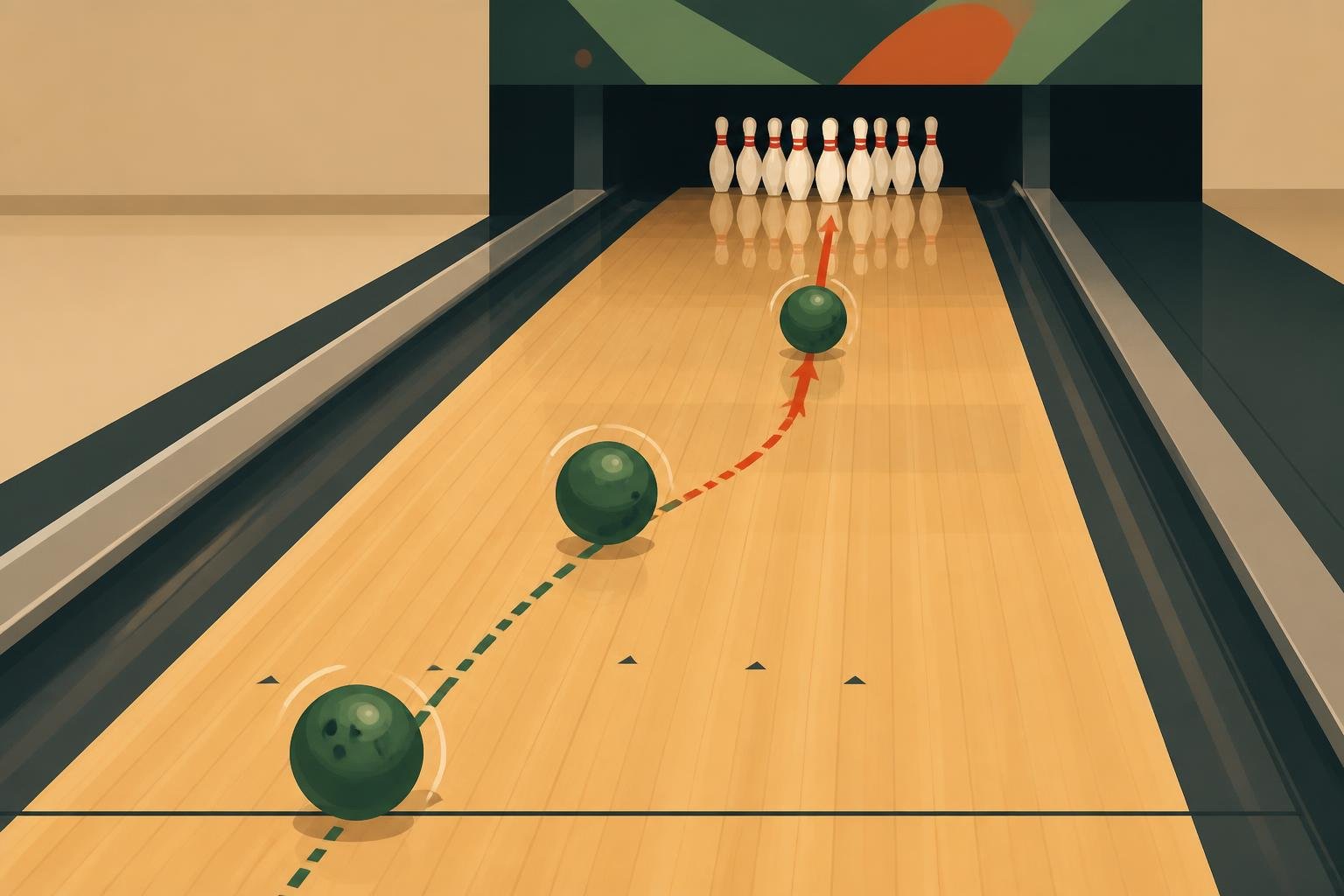
The 60-foot distance gives the ball enough room to do that work. If the lane were much shorter, the ball would have less time to react. If it were much longer, the ball could react differently. But on a regulation lane, your ball has enough distance to respond to the oil and friction in a way that makes targeting meaningful.
That is also why bowling is not just about throwing the ball hard. You are not trying to launch it at the back wall. You are trying to send it through the lane with the right speed, roll, and line so it finishes in the pocket or handles the spare you are shooting.
The lane does not change, but the shot still can
The lane length stays the same, but the way your shot behaves can change from one center to another because of lane condition, surface texture, and how much oil is on the lane. That is where bowlers start noticing that one house plays “tighter” or “softer” than another.
You do not need to be a lane mechanic to notice the difference. You have probably felt it already if you have bowled in more than one center. One ball seems to pick up early. Another skids farther than expected. Sometimes you throw the same shot twice and get two different looks.
That is why coaches keep coming back to repeatable setup and targets. If the lane is giving you a consistent challenge, the first thing you want is a consistent starting point. From there, you can make a reasonable move instead of chasing every frame.
The breakpoint is the part of the lane where your ball starts to respond
One term you will hear once you spend more time around bowlers is breakpoint. That is the part of the lane where your ball starts to make its move toward the pocket. It is not a marked line on the lane, but it is a very real spot in the shot.
Think of it like this: your eyes can focus on an arrow near the front of the lane, your ball can travel down the boards, and somewhere farther downlane the ball starts reading friction and turning. That turn point is the breakpoint. Good players pay attention to it because it tells them whether the shot is too early, too late, too sharp, or too weak.
For you as a bowler, this matters because it connects lane length to what you actually see. You are not just looking at a long strip and hoping for the best. You are sending the ball to a target, watching it respond, and learning where it needs to start its move.
How to use the lane markings on your next game
Start with your feet, then pick a target
A simple way to think about bowling is to work in order: feet, target, ball path. Your feet give you a repeatable start. Your target gives your eyes a job. Your ball path connects the two.
If you are right-handed, that might mean standing on a comfortable board, looking at a specific arrow, and sending the ball over that target with a smooth release. If you are left-handed, the same idea applies from the opposite side. The lane markings do not need to change for you. You just need to use them consistently.
This is where new bowlers often overcomplicate things. They try to aim at the pins, throw harder, and hope the ball figures itself out. It usually works better to keep the setup simple and give yourself one clear line to repeat. That is the part of bowling you can actually control.
A plain-English example for a right-hander
Imagine you are right-handed and trying to hit the pocket more often. You set your feet in the same spot each time, look at a target near the arrows, and release the ball on a line that carries it toward the right side of the head pin. If the ball is missing a little inside, you might move a board left or right, depending on what you are seeing.
The point is not to memorize a perfect number and never move. The point is to know what to look at so you can make a useful adjustment. When you use the lane markings properly, you can make small, sensible corrections instead of changing your whole approach after one bad frame.
A plain-English example for a left-hander
If you are left-handed, the same logic applies from your side of the lane. You set up from the left, choose a target that fits your line, and watch the ball travel through the lane and start its move at the right time. If your shot is drifting too far out or crossing too far inside, you can move your feet or your target by a board or two and keep the rest of the shot the same.
That mirrored layout is easy to forget if you mostly watch right-handed bowlers. Once you start reading the lane from your own side, it becomes a lot less mysterious.
Why spare shooting gets easier when you know the lane
Lane markings matter just as much on spares as they do on strikes, sometimes more. On a strike shot, you may want a ball that hooks. On a spare shot, you often want a straighter path so the ball does not hook past the pin you are trying to pick off.
That is where knowing the lane helps. You can line up differently for a corner pin, a single pin in the middle of the deck, or a leave on the opposite side. You are not guessing from shot to shot. You are using the lane as a guide.
If you want to improve faster, learning how to read the lane on spares is a good place to start. It keeps your game from feeling random, and it gives you a clear plan when the first ball does not strike.
Why one bowling center feels different from another
The dimensions stay the same, the atmosphere does not
Certified lanes are built to standard dimensions, but that does not mean every center feels identical. One house may have brighter lighting, another darker lane finish, another a slicker approach, and another a different visual contrast at the arrows and pins.
That is why your home center can feel perfectly familiar, then another center can suddenly make you question everything. The lane has not changed size. Your eyes are just dealing with a different setting.
Experienced bowlers notice this quickly. They do not just walk up and throw. They look at the lane, the shine, the arrows, the pin deck, and how the ball reacts on the first shot or two. That first impression matters because it tells you how to read the lane that day.
Why the lane can look shorter or longer than it is
Your brain uses contrast, symmetry, and lighting to judge distance. Bowling lanes are designed with a lot of symmetry, which is great for the game but not always great for your eyes. If the back wall is bright, the pins can look closer. If the lane surface is dark or reflective, the whole thing can feel stretched out.
That is one reason beginners sometimes say they “threw it pretty good” even when the ball missed by a lot. The shot felt close because the lane made it feel close. The lane, however, is still 60 feet long whether it looks that way or not.
Once you know that, you stop trusting the feeling alone and start trusting the markings. That is a much better habit.
Bowling lane measurements you should actually remember
The useful numbers, in plain English
You do not need to memorize every spec in the building. A few key numbers are enough for most bowlers.
- 60 feet, from the foul line to the head pin, is the playing distance most bowlers mean when they ask how long a lane is.
- 62 feet, 10-3/16 inches, is the longer reference measurement that includes the pin deck.
- About 41 1/2 to 42 inches wide, or 39 boards, describes the lane width.
- The arrows sit roughly 12 to 16 feet from the foul line, which is why they work well as aiming targets.
- The approach is at least 15 feet long, so you have room to set up and release.
If you remember those basics, you will understand most of what people are talking about when they explain lane play, targeting, and alignment. You do not need technical language to use the lane well. You need a few good reference points and the willingness to repeat them.
Common questions bowlers ask about lane length
Is the bowling lane 60 feet or 62 feet?
For most bowlers, the answer is 60 feet from the foul line to the head pin. The longer figure, 62 feet, 10-3/16 inches, includes the pin deck and is used for lane specifications and reference measurements.
How far are the arrows from the foul line?
The arrows are roughly 12 to 16 feet from the foul line. They are close enough to see clearly and far enough downlane to give you a useful aiming target.
How wide is a bowling lane?
A standard lane is about 41 1/2 to 42 inches wide, which comes out to 39 boards. That narrow width is one reason bowlers talk in board counts instead of inches.
Why do the dots on the approach matter?
The dots help you start in a consistent spot. If your starting position is steady, it is much easier to repeat the same swing and ball path.
Do left-handed bowlers use the same markings?
Yes. The lane markings are the same. Left-handers simply use the opposite side of the lane as their reference point.
What to pay attention to when you step onto the lane
A short checklist that keeps things simple
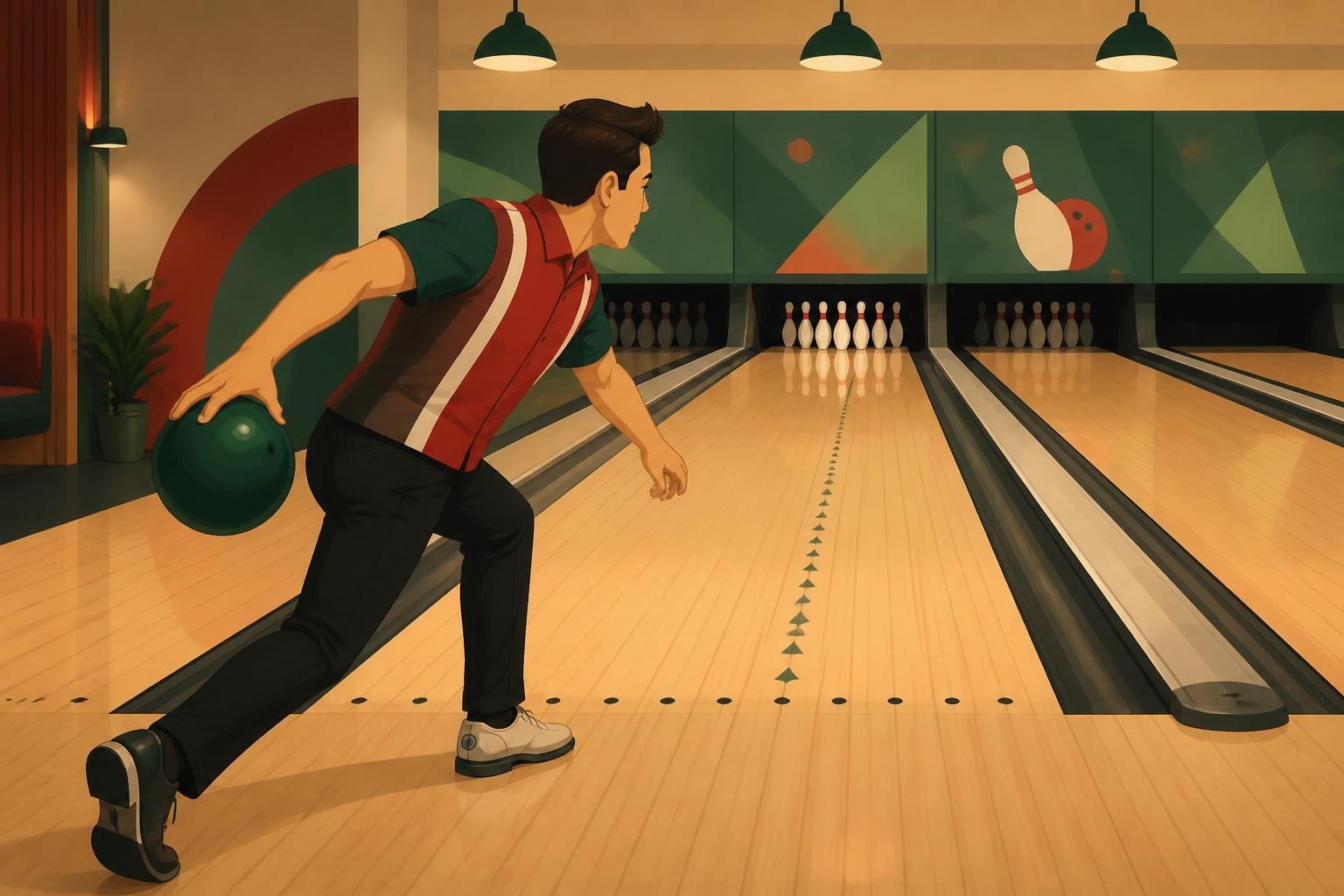
When you are about to bowl, you do not need to think about every detail at once. Start with the basics:
- Find a starting position on the approach that feels balanced.
- Pick an arrow or target area, instead of staring at the pins.
- Watch where the ball crosses the lane and how it finishes.
- Make a small move if the ball is missing the pocket or the spare.
That is the practical side of understanding how long a bowling lane is. The number itself matters, but only because it helps you understand what the ball has to do over that distance. Once you know where to stand and what to aim at, the lane starts giving you feedback you can use.
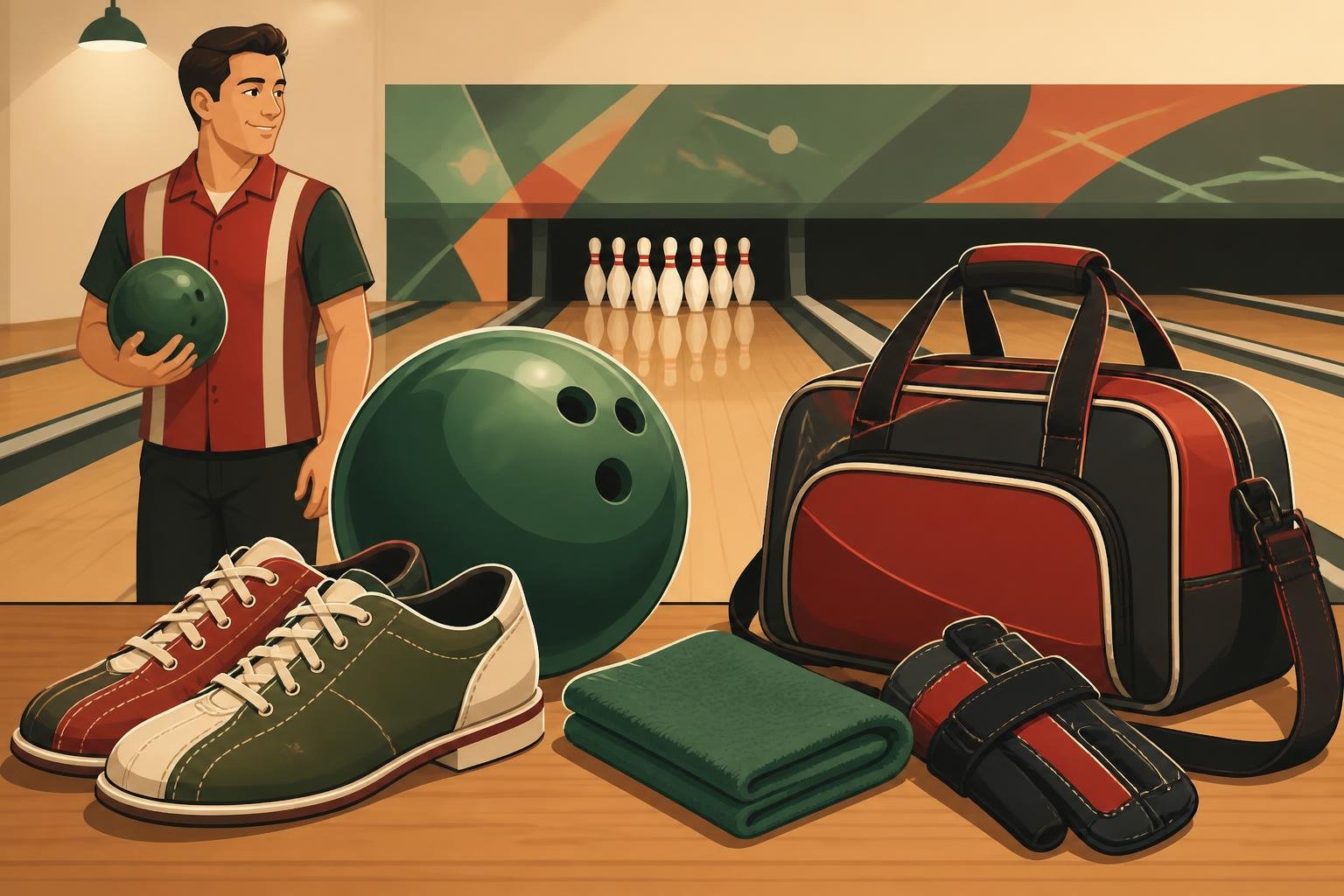
If you are still working on a reliable setup, it can also help to look at a simple guide to bowling tips for beginners. If you are figuring out what to bring to the alley, bowling gear for beginners is also worth a look. And if you want a fuller explanation of lane aiming itself, the use lane arrows guide walks through that part in more detail.
How lane length and markings fit together
Once you put the pieces together, the lane is less mysterious than it first appears. It is 60 feet from the foul line to the head pin, and a little longer when you include the pin deck. It is narrow enough that boards matter. It has arrows to help you aim, dots to help you set up, and a foul line that keeps the playing area clearly defined.
That is really the heart of it. The lane is built so you can read it. The markings are not decoration, and they are not there just for league bowlers with a lot of jargon. They are there so you can line up your feet, choose a target, and send the ball on a path you can repeat.
For a new or casual bowler, that is the part worth remembering. You do not need to guess at the end of the lane. You can use the lane itself to help you bowl better, one shot at a time.
Bowling lane length, measured the way bowlers actually use it
If you remember only one thing, make it this: a bowling lane is 60 feet from the foul line to the head pin, and the fuller reference measurement is 62 feet, 10-3/16 inches because it includes the pin deck. The rest of the markings, the arrows, the dots, the boards, and the foul line, are there to help you turn that distance into a shot you can repeat.
That is what makes the lane useful. Once you know what the markings mean, you stop aiming blindly at the pins and start giving yourself a real plan. And once that happens, bowling usually feels a lot less like guessing and a lot more like something you can learn.